


Every spring it’s the same story. The lawn greens up, you think it’s looking good — and then you start noticing things that aren’t grass. Yellow flowers, white clover patches, spreading vines, rosettes of wide flat leaves taking over the thin spots. By May, what looked like a lawn in March is showing its problems.
Most homeowners know they have weeds. Most don’t know which ones they have, what those weeds are telling them about their lawn, or what actually gets rid of them. Here’s a straightforward ID guide for the broadleaf weeds we see most commonly in Burlington County lawns — and what to do about them.
What Is a Broadleaf Weed?
Weeds in lawns fall into two categories: grassy weeds (crabgrass, nutsedge) and broadleaf weeds. Broadleaf weeds are everything else — plants with wide, flat leaves, visible flowers, and root systems that compete directly with your turf for nutrients, water, and space.
The important thing to understand is that weeds don’t show up randomly. They show up where your lawn is giving them an opening — thin turf, compacted soil, low fertility, poor drainage, wrong mowing height. A dense, healthy lawn is genuinely the best weed control there is. Weeds are symptoms. The weed is the signal; the lawn is the problem.
That said, once weeds are established, you need to treat them directly. Here’s what you’re looking at.
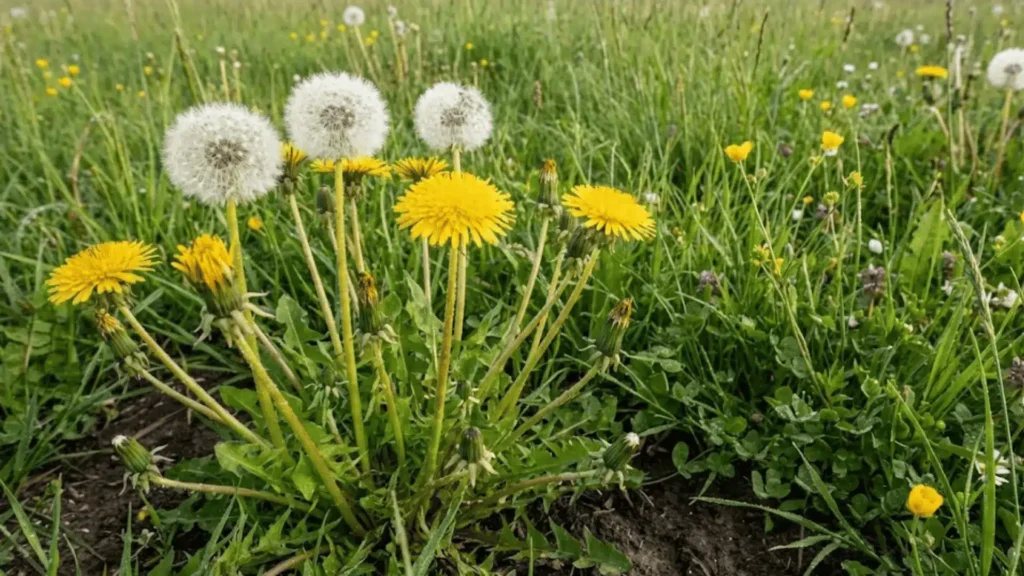
Dandelion
What it looks like: The most recognizable weed in any lawn. Bright yellow flowers that turn into the familiar round white seed heads. Low-growing rosette of jagged, tooth-edged leaves. Deep, thick taproot.
Why it’s in your lawn: Dandelions establish easily in thin or stressed turf where the grass canopy has gaps. Once established the taproot anchors them well below mowing depth — mowing cuts the flower off but doesn’t slow the plant down. Each seed head produces seeds that float and spread widely.
What it’s telling you: Your lawn has thin spots that need to be addressed. If dandelions are widespread after treating, thickening the turf with overseeding is the priority.
Treatment: Post-emergent broadleaf herbicide containing 2,4-D handles dandelions reliably. Hand-pulling works only if you get the full taproot — leave any of it behind and it regrows. Fall is the most effective time to treat; spring treatment works but the plants are more mature and harder to knock out.
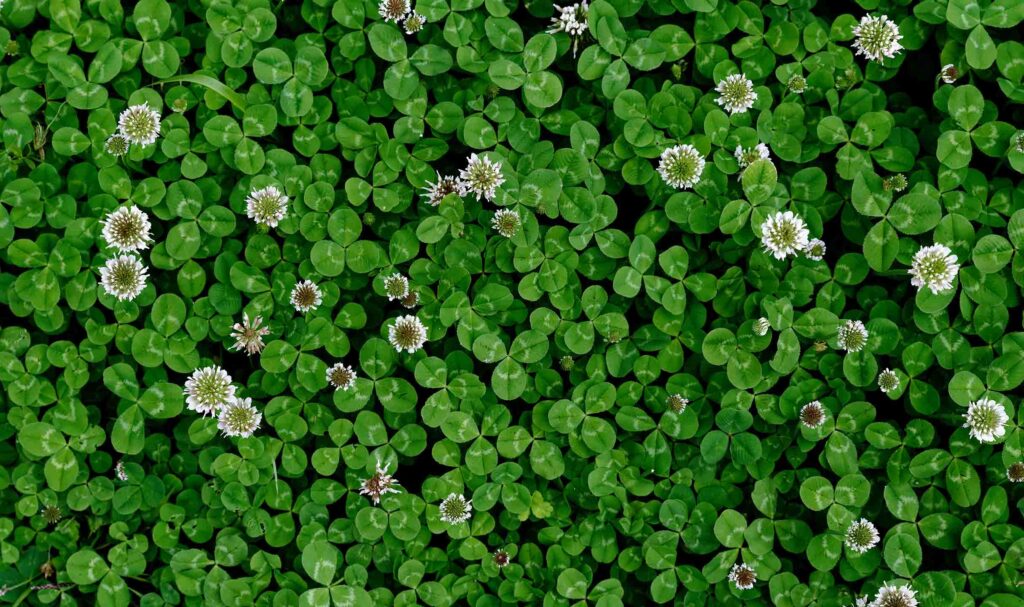
White Clover
What it looks like: Low-growing, spreading plant with the classic three-leaf pattern. White or occasionally pink rounded flower heads in late spring into summer. Spreads by runners (stolons) along the soil surface.
Why it’s in your lawn: Clover is a legume — it fixes nitrogen from the air into the soil. That sounds like a good thing, but what it actually tells you is that your lawn’s nitrogen levels are low. Clover thrives where grass is underfertilized because it doesn’t need external nitrogen. A well-fertilized lawn naturally crowds clover out.
What it’s telling you: Your fertilization program needs attention. Clover in a lawn is almost always a fertility problem before it’s a weed problem.
Treatment: Post-emergent broadleaf herbicide with dicamba or MCPP controls clover. It often takes more than one application because clover can be persistent. Improving fertility through a consistent fertilization program is the long-term fix.
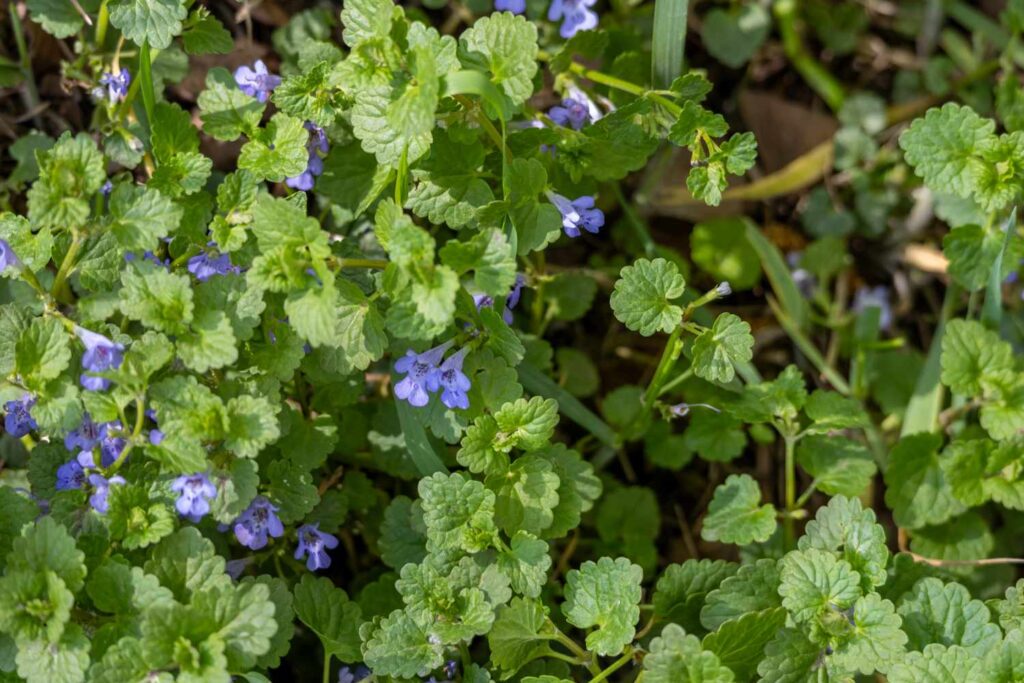
Ground Ivy (Creeping Charlie)
What it looks like: Low-growing, creeping vine with small scalloped round leaves and tiny purple-blue flowers in spring. Has a faint minty smell when crushed. Spreads aggressively by runners along the ground.
Why it’s in your lawn: Ground ivy loves shaded, moist conditions with poor drainage. It’s one of the more aggressive spreaders on this list and can take over large areas quickly, especially under trees or along the north side of a house where the lawn is already thin.
What it’s telling you: You may have a drainage or shade issue in that area. Ground ivy rarely dominates a lawn that’s in full sun with good drainage and dense turf.
Treatment: One of the harder broadleaf weeds to control. Products containing triclopyr are most effective. Multiple applications are usually needed. Improving drainage and overseeding to thicken turf helps prevent it from coming back.
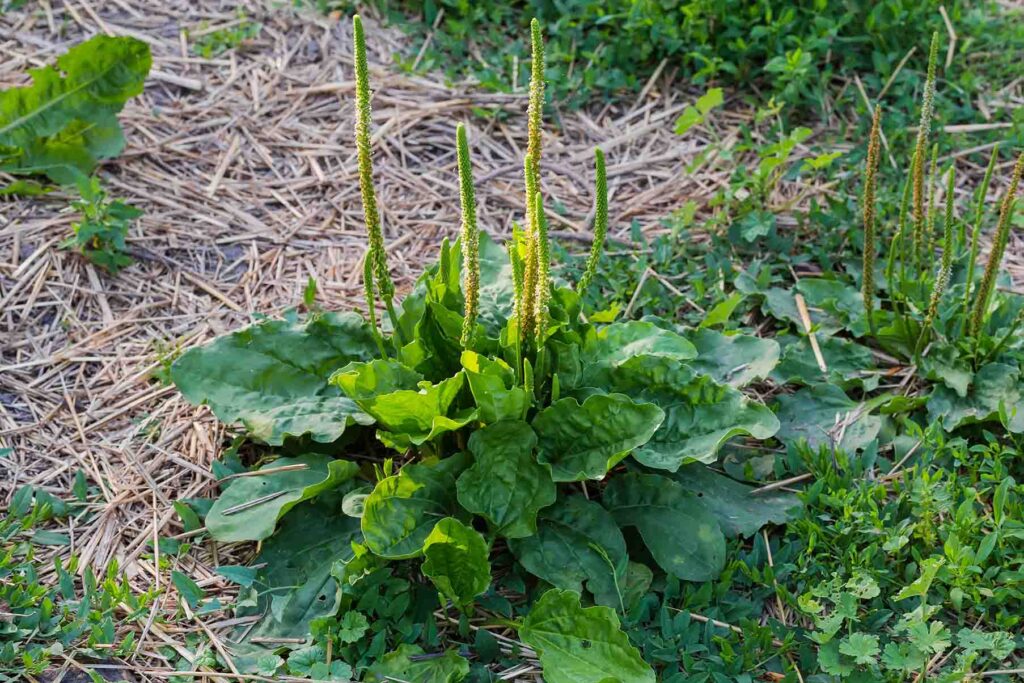
Broadleaf Plantain
What it looks like: Flat rosette of wide, oval, heavily ribbed leaves that hug the ground. Sends up tall narrow flower stalks in summer. Very low growth habit — mowing right over it doesn’t help.
Why it’s in your lawn: Plantain thrives in compacted soil. If you’re seeing it along walkways, driveways, high-traffic areas, or anywhere the soil gets packed down, that’s the connection.
What it’s telling you: Soil compaction. Aeration is worth considering in areas where plantain is concentrated.
Treatment: Post-emergent broadleaf herbicide handles plantain. Aerating the soil and overseeding to fill in bare areas addresses the underlying cause.
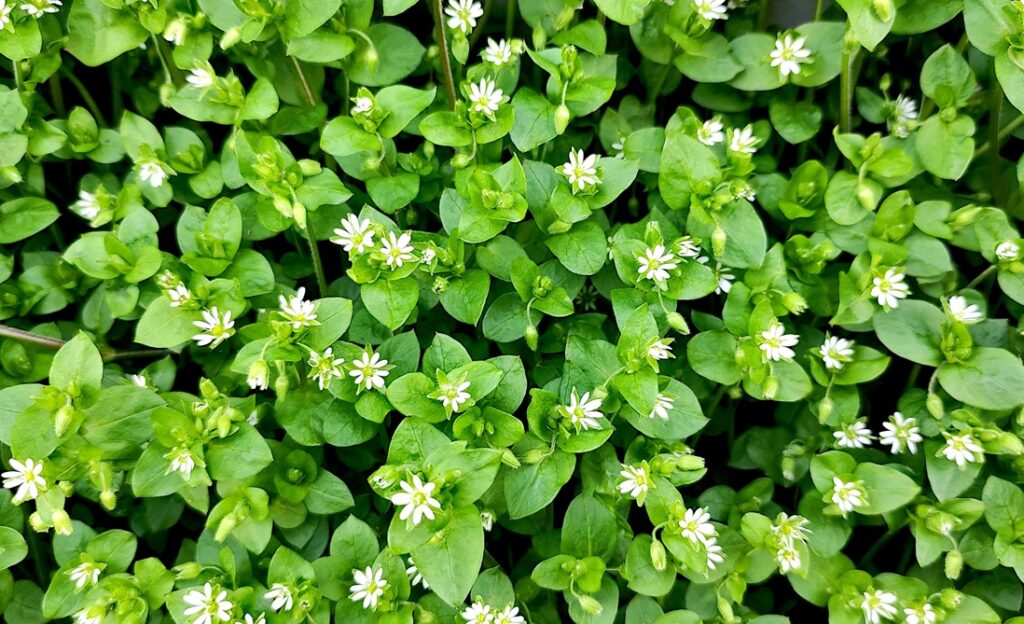
Chickweed
What it looks like: Low, spreading mats of small oval leaves with tiny white star-shaped flowers. Feels soft and delicate. Thrives in cool, moist conditions — you’ll see it most in early spring and fall.
Why it’s in your lawn: Chickweed is a cool-season annual that germinates in fall, overwinters, and is fully established by the time you notice it in spring. It loves thin, shaded, damp areas and fills in where grass is struggling.
What it’s telling you: Thin turf in cool, moist areas. The fix is improving turf density in those spots.
Treatment: Post-emergent broadleaf herbicide in early spring when the plant is young and actively growing. By late spring it’s setting seed and dying on its own — treating it at that point isn’t worth the effort. Fall treatment of young plants before winter is the most effective timing.
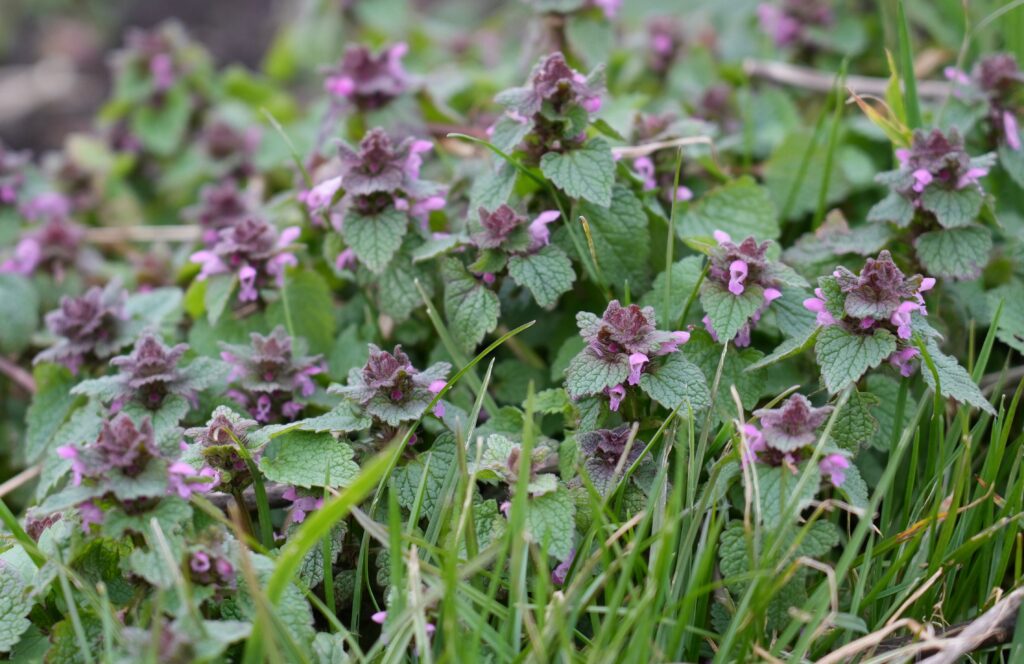
Henbit and Purple Deadnettle
What it looks like: These two often grow together and are frequently confused. Both are winter annuals with small purple-pink flowers on upright stems. Henbit has rounded scalloped leaves that wrap around the stem. Purple deadnettle has more triangular leaves with a purplish tint. Both appear in early spring and die out as temperatures rise.
Why it’s in your lawn: Same story as chickweed — cool-season weeds that establish in fall in thin areas. By the time you see the purple flowers in March, the plants are already mature.
What it’s telling you: Thin turf that was open in fall. Focus on fall overseeding to close those gaps before next season.
Treatment: They die on their own by late spring, so spring treatment is often not worth it. If they’re widespread, treat in fall when the young plants are just establishing and are most vulnerable to herbicide.
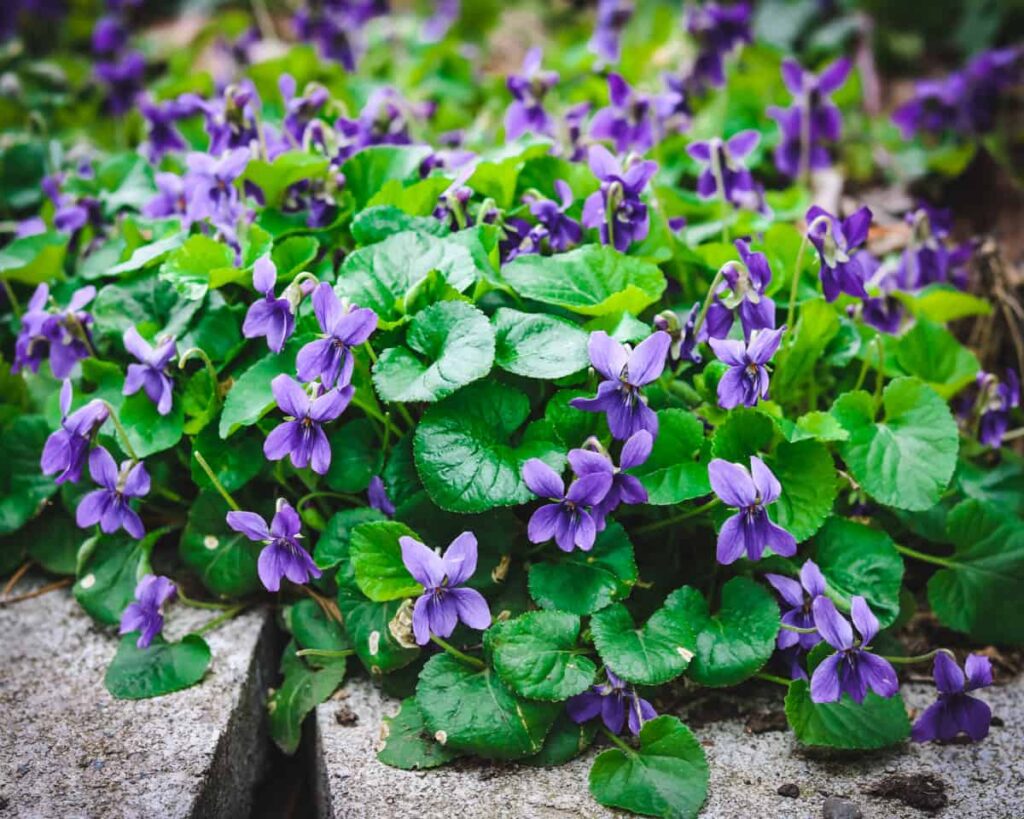
Wild Violet
What it looks like: Heart-shaped dark green leaves with purple or occasionally white flowers in spring. Low-growing, spreading by both seeds and underground rhizomes. Leaves are glossy and somewhat waxy.
Why it’s in your lawn: Shaded, moist areas. Wild violet is one of the tougher weeds to control once established because the waxy leaf surface resists herbicide absorption.
What it’s telling you: You likely have a shaded, moist spot that’s struggling to grow dense turf. Shade-tolerant grass varieties and improved drainage help long-term.
Treatment: Products containing triclopyr are most effective. The waxy leaves mean standard broadleaf herbicides often don’t penetrate as well, so multiple applications and good timing — early fall when the plant is actively moving energy into its roots — give the best results.
The Bigger Picture
Every weed on this list is easier to prevent than to eliminate. A lawn that’s fertilized consistently, mowed at the right height (3 to 3.5 inches for cool-season turf in South Jersey), and overseeded in fall to fill thin spots is a lawn that naturally resists weed pressure. Weeds don’t take over healthy, dense turf — they take over the gaps.
That’s the philosophy behind our fertilization and weed control program. Six applications through the season, timed to when your lawn actually needs nutrients and when weeds are most vulnerable to treatment. Pre-emergent in spring to stop weed seeds before they germinate. Post-emergent treatment through the season for broadleaf weeds that establish. A program that works with the way your lawn grows, not against it.
If your lawn is showing more weeds than grass this spring, it’s worth having a conversation. Morgan Landscape serves Burlington County — Lumberton, Eastampton, Mount Laurel, Westampton, and the surrounding towns.