

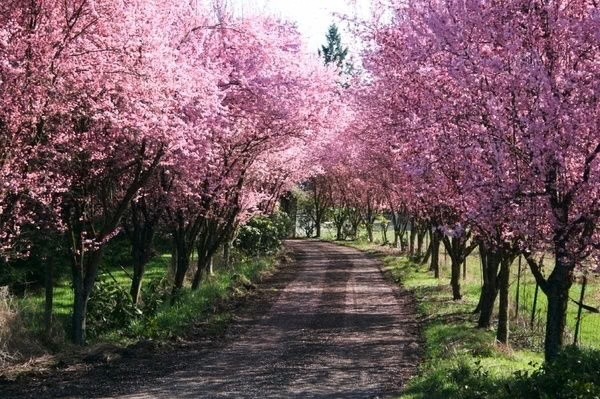
Every spring it happens the same way. You’re driving through Lumberton, Eastampton, Mount Holly — and suddenly the whole street is exploding with color. Pink, white, purple. Trees you walk past all year without thinking twice are putting on a show for about two weeks, and then it’s over.
If you’ve ever wondered what you’re actually looking at, this post is for you. Here’s a breakdown of the most common spring flowering trees you’re going to see across Burlington County — and what’s actually worth planting if you want that same look in your own yard.
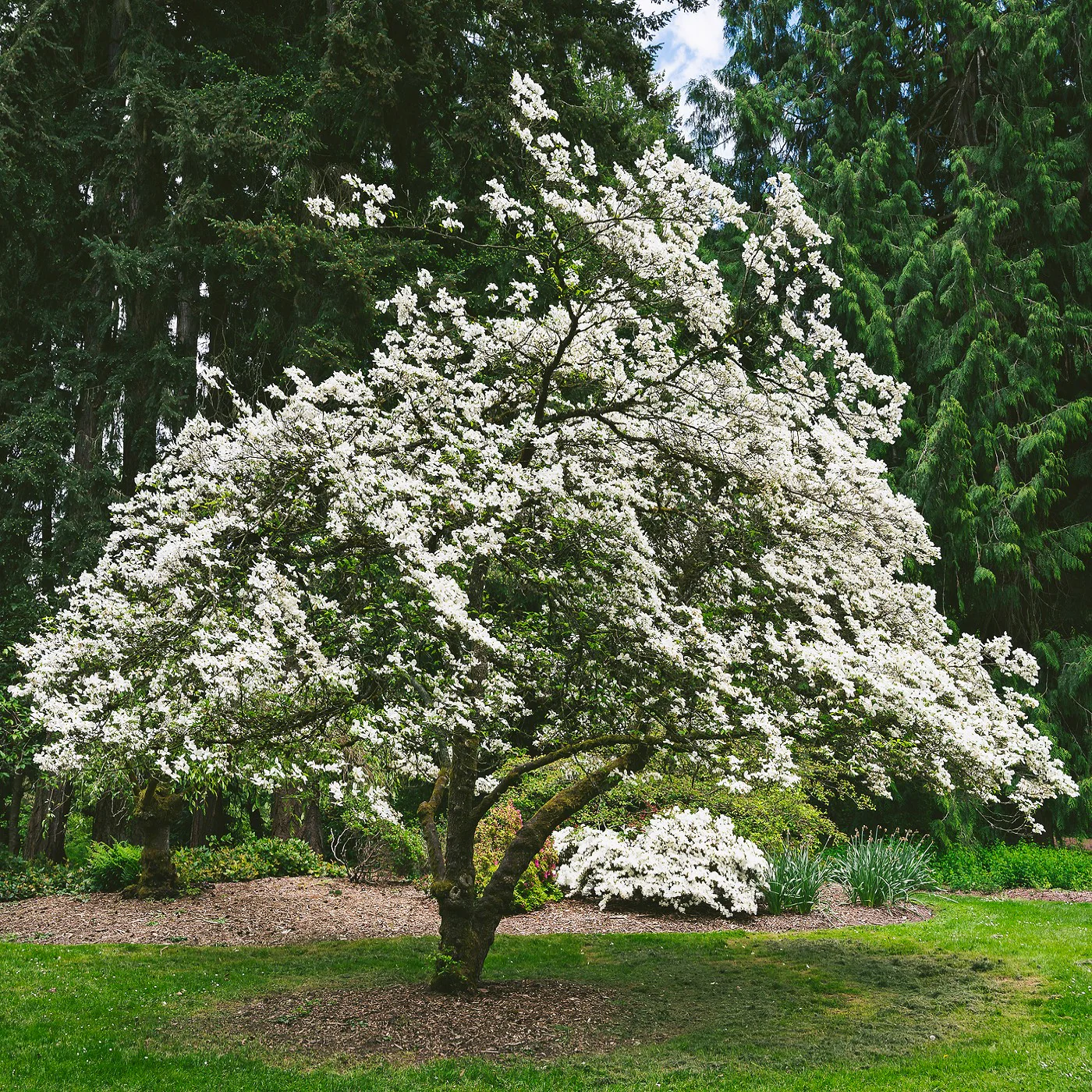
Flowering Dogwood
The dogwood might be the most iconic spring tree in the entire mid-Atlantic region, and for good reason. It blooms in mid-spring with wide, flat flowers — most commonly white, though pink varieties are popular too. It’s a native tree, which means it’s perfectly adapted to South Jersey’s soil and climate. It doesn’t fight the environment. It just grows.
Dogwoods stay on the smaller side, typically reaching 15 to 25 feet, which makes them ideal for residential properties where you don’t want something that’s going to take over. They also have solid fall interest — the leaves turn deep red before dropping, and the small red berry clusters attract birds through the winter.
One thing to know: dogwoods prefer partial shade and well-drained, slightly acidic soil. If you plant one in full blazing sun with no moisture, it’s going to struggle. Get the conditions right and you’ve got a tree that can live 80 years.
Redbud
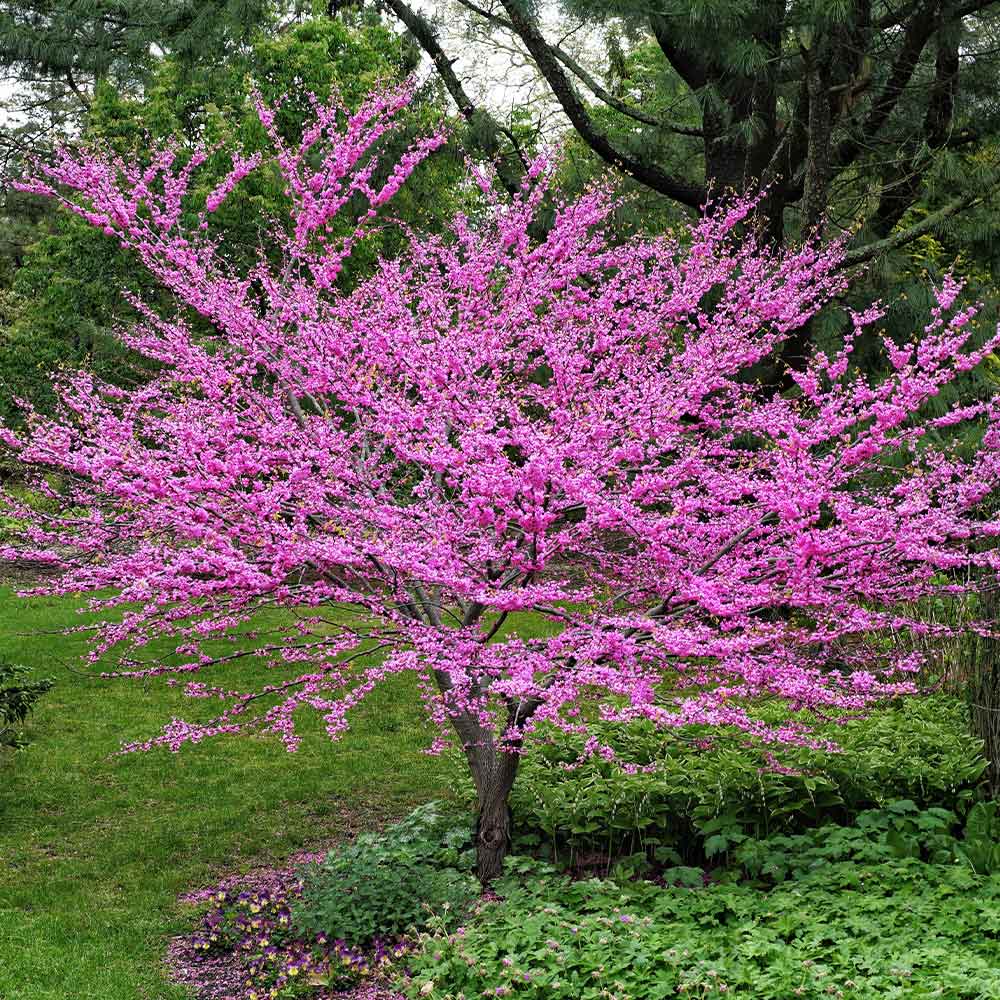
Redbud has become one of the most requested flowering trees in the area, and it’s easy to understand why. Before the leaves even come out, the entire tree — branches, trunk, everything — is covered in tiny bright pink-purple flowers. It looks almost unreal. That bloom usually hits in early to mid-April in Burlington County, which means it’s one of the first trees to show any color after winter.
Redbuds grow to about 20–30 feet and have a graceful, slightly irregular shape. The heart-shaped leaves that follow the bloom are attractive all season. There’s also a popular cultivar called ‘Forest Pansy’ that holds purple-tinted foliage through summer if you want year-round color beyond the spring show.
They’re adaptable to most soil types, which makes them a reliable choice for a wide range of properties around here.
Cherry Trees
Cherry trees are probably the most photographed spring tree in the country, and South Jersey has plenty of them. The problem is that “cherry” covers a lot of ground, so here’s a quick breakdown of what you’re likely seeing:
Yoshino Cherry is what lines the National Mall in Washington D.C. — masses of single white to light pink flowers that open early and create that classic cloud-of-blossoms effect. These grow into medium-sized trees, 20–30 feet, and they bloom fast and drop fast. The show lasts about 10–14 days. Stunning while it lasts.
Kwanzan Cherry blooms a little later and has double, fully layered deep pink flowers that look almost like pompoms. It’s a showier bloom but comes after Yoshino. Also reaches 20–30 feet with a vase-shaped canopy.
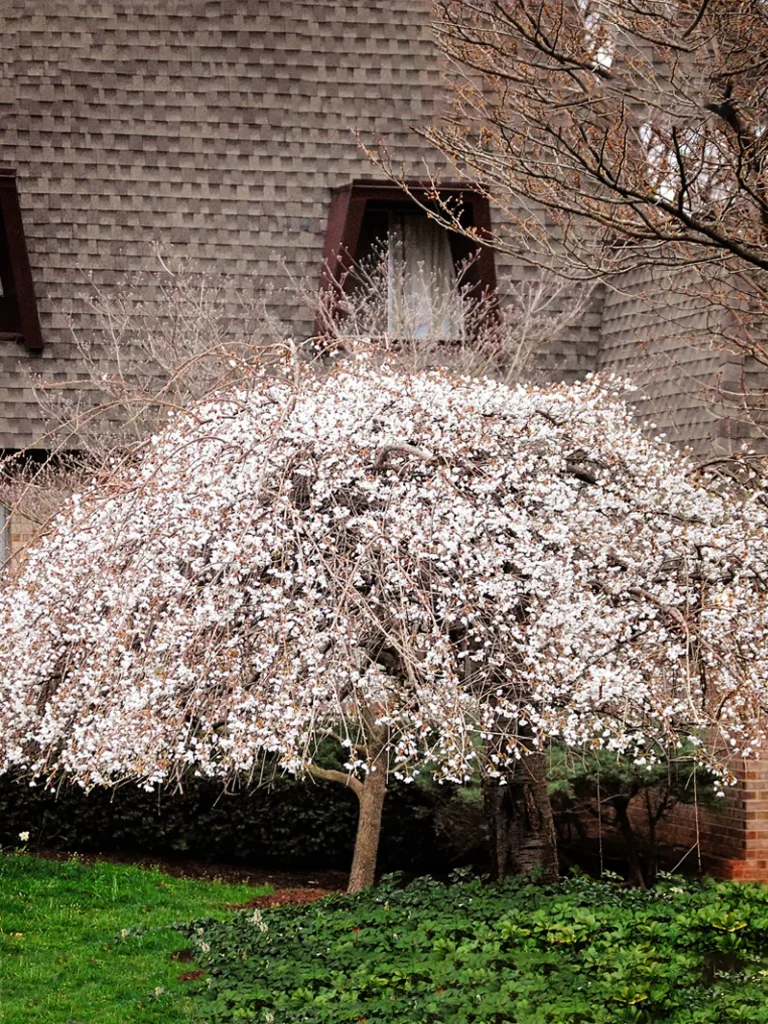
Weeping Cherry is probably the most popular choice for residential landscapes specifically because of its dramatic drooping form. The branches cascade down from the top of the tree and flower along the entire length — white or pink depending on the variety. They tend to be smaller trees, which makes them perfect as a focal point in a front yard. We plant a lot of these.
All cherries are relatively fast growers and fairly adaptable. They’re not the longest-lived trees, but for 20–30 years of spring performance, they’re hard to beat.
Magnolia
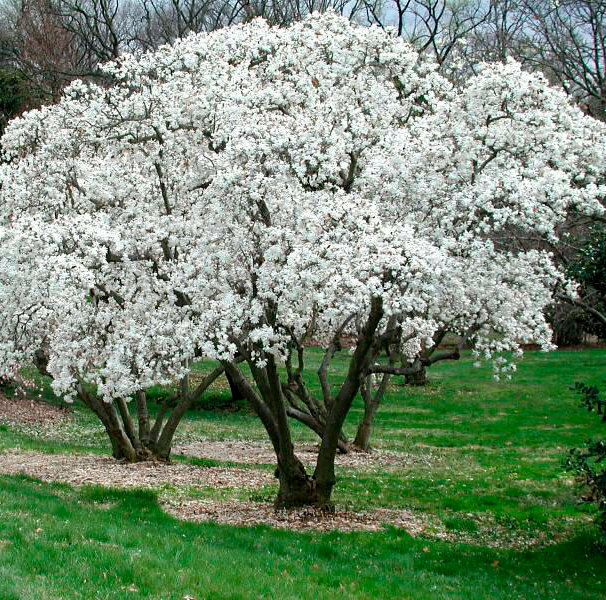
Magnolias bloom early — sometimes too early. Saucer magnolias in particular can pop open in late March and get hit by a late frost, which turns those beautiful flowers brown overnight. Frustrating, but it happens in South Jersey. The tree recovers fine, it just ruins the show for that year.
The most common types you’ll see around here:
Saucer Magnolia — large pink to white tulip-shaped blooms, blooms before the leaves come out. Grows 20–30 feet. This is what most people think of when they picture a magnolia in a front yard.
Star Magnolia — smaller tree, smaller flowers, pure white and slightly earlier than saucer. Good for tighter spaces.
Sweetbay Magnolia — a native variety that blooms later in spring (less frost risk), fragrant white flowers, more upright and multi-stemmed. Better for partially shaded spots or areas with wetter soil.
Magnolias want full sun and well-drained soil. Give them room — saucer magnolias spread wide.
Thundercloud Plum
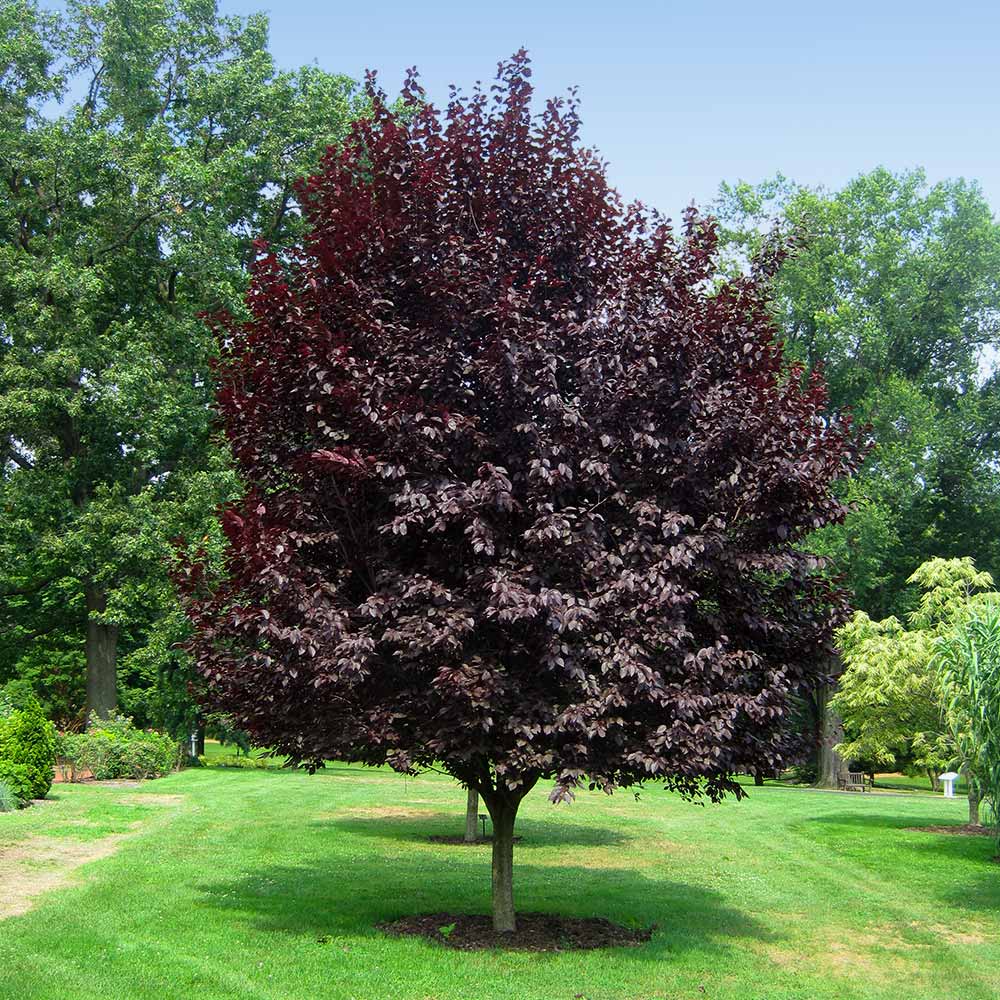
This one doesn’t get talked about enough. Thundercloud Plum is a purple-leaf flowering plum that blooms in mid-spring with fragrant light pink flowers — but what makes it stand out is that the deep purple foliage holds all season long. Most flowering trees give you two weeks of bloom and then spend the rest of the year looking like every other green tree. Thundercloud gives you color from April straight through October.
It grows to about 20–25 feet, needs full sun to maintain that purple leaf color, and is a solid choice for anyone who wants a tree that earns its spot in the yard year-round, not just for two weeks in April.
We’ve planted these on a number of jobs around Burlington County and they’re consistently a client favorite once they see what the full-season foliage looks like.
What to Think About Before You Plant
A few things worth knowing regardless of which tree you’re considering:
Right tree, right spot. Most of these trees want full sun and well-drained soil. Don’t put a dogwood in full sun with clay soil and expect it to thrive. Match the tree to the conditions.
Give it room. A lot of homeowners underestimate mature size. A weeping cherry looks small when you buy it. In 15 years it’s a 20-foot focal point. Plan accordingly.
Pair it with a summer bloomer. Flowering trees put on their show in spring and then spend the rest of the season as a backdrop. One of the best things you can do is pair a spring flowering tree with a summer-blooming shrub nearby — crape myrtle, weigela, or butterfly bush — so you have rotating color from April through September instead of just a two-week window.
Flowering trees tie into landscape design. The best installations we do aren’t just a tree dropped in the middle of a lawn. Flowering trees work best when they’re incorporated into a larger planting plan — mulched beds, companion shrubs, good sightlines from the street or the house. That’s what takes a yard from nice to something people actually comment on.
If you’re looking at your yard and thinking you want some of that spring color for yourself, Morgan Landscape can help. We do landscape design and planting throughout Burlington County — Lumberton, Eastampton, Mount Laurel, Westampton, and the surrounding towns.