

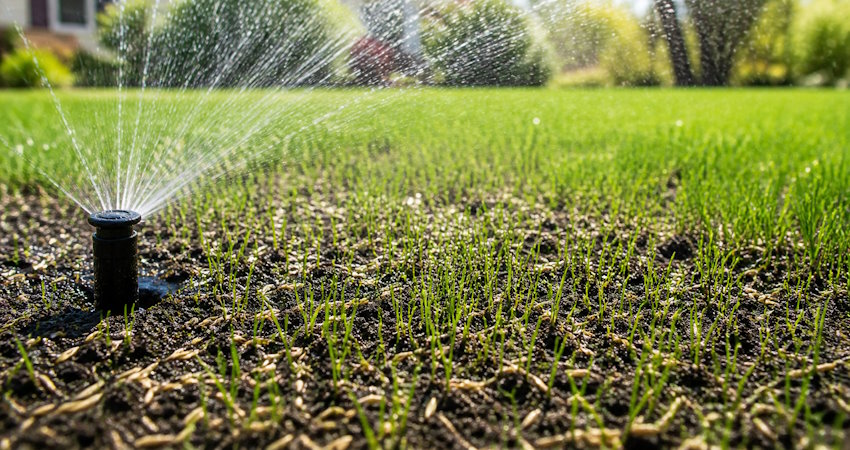
Fall aeration and overseeding can help a thin South Jersey lawn grow thicker, and the care afterward does not have to be complicated. Keep the seeded soil moist without puddles, adjust for rainfall, and gradually water more deeply as roots develop. You do not need an in-ground sprinkler system to give new grass a good start.
Consistent moisture gives seed the best chance to establish. A hose and portable sprinkler can do the job, and timely fall rain can help. If watering is limited, that is a reason to plan around your property and the weather, not automatically rule out overseeding.
For South Jersey homeowners, the challenge is rarely finding one universal schedule. Sun exposure, soil type, wind, sprinkler coverage, rainfall, and the grass varieties in the seed mix all affect how quickly the surface dries. A better plan is to understand what the seed needs at each stage and adjust to the lawn in front of you.
The First Goal: Keep the Seedbed Moist, Not Muddy
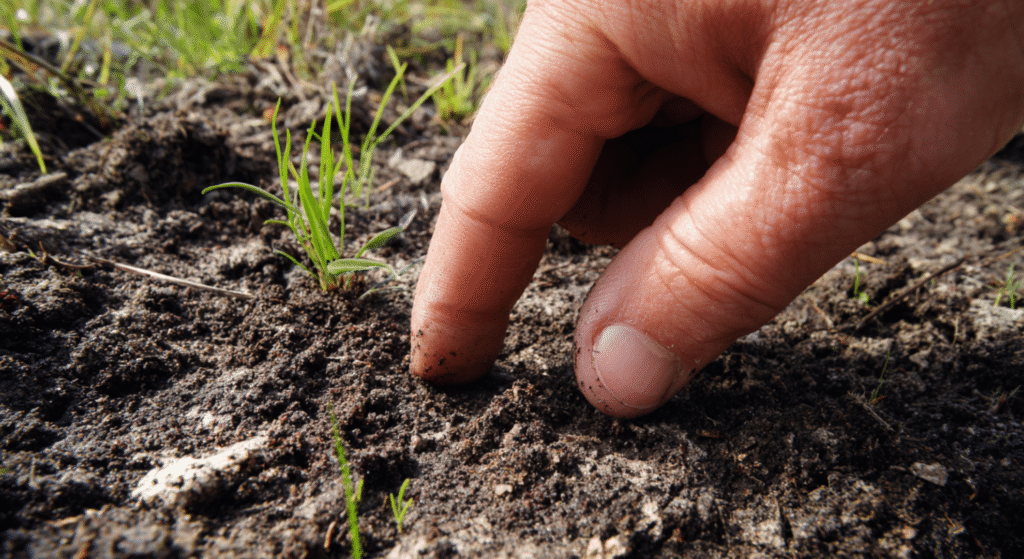
Grass seed absorbs water before it germinates. Once that process begins, allowing the seed to dry repeatedly can reduce establishment. Rutgers Cooperative Extension recommends keeping the upper portion of a newly seeded lawn moist while seedlings are developing, while also warning against creating constantly muddy conditions.
In practical terms, that usually means light, frequent watering at first. You are trying to wet the seed and the top layer of soil without creating puddles, washing seed downhill, or sending water into the street.
- The surface should look damp after watering, not flooded.
- Water should soak in rather than run across compacted areas.
- Slopes and sunny edges may dry faster than shaded, level areas.
- Rain counts, but a brief shower may not wet the full seedbed evenly.
If footprints sink into soft soil or water remains pooled, the lawn is getting too much at once. If the surface turns pale and dusty before the next cycle, it is drying too far.
How Often Should New Grass Seed Be Watered?
There is no honest answer that works for every property. A sunny lawn on sandy soil may need attention more often than a protected lawn with heavier soil. A windy afternoon can dry the surface quickly. A cool, cloudy day may require much less water.
During dry weather, two or three light watering cycles a day can be a starting point, not a fixed requirement. Check the seeded surface in the morning, around midday, and later in the afternoon, then water as needed to prevent drying. Cool, rainy conditions may require little or no supplemental watering. Hot, windy spots may dry faster. Judge by soil moisture rather than a timer alone.
Early morning is an efficient time to water because temperatures are cooler and wind is often lighter. A second light cycle may be needed later when conditions are warm or breezy. Long evening watering that leaves the lawn saturated overnight is not the goal.
Can You Overseed Without a Sprinkler System?
Yes. You can aerate and overseed a lawn without an in-ground sprinkler system, and many South Jersey homeowners do. Watering will help the seed germinate more quickly and consistently, but not having an irrigation system should not automatically keep you from improving your lawn.
A hose-end sprinkler can cover the lawn in sections, and even occasional watering is beneficial. During fall, cooler temperatures, rainfall, and morning dew can all help the soil retain moisture. Morning dew often dries as the day goes on, so supplemental watering is still encouraged whenever possible.
The simple advice is to water as consistently as your schedule and property allow. Give extra attention to sunny areas, slopes, and edges near pavement because they tend to dry first. Even without a sprinkler system, fall aeration and overseeding can still produce meaningful improvement and help the lawn continue filling in into spring.
Coverage Matters as Much as Run Time
A sprinkler can run for ten minutes and still miss a corner, a strip along the driveway, or the far side of a rectangular lawn. Those missed areas often explain why one section germinates and another stays thin.
Watch the sprinkler rather than assuming its pattern is even. Move portable sprinklers as needed and pay close attention to:
- Edges beside sidewalks and driveways
- Narrow side yards
- Areas blocked by shrubs, fences, or vehicles
- High spots that dry sooner
- Slopes where water begins to run before it soaks in
A few shallow containers placed around the watering zone can help reveal uneven coverage. They do not need to become a complicated measuring project; the point is simply to see whether each part of the lawn is receiving roughly the same treatment.
What Changes After the Seed Germinates?
Once seedlings are visible, do not shut the water off. Young roots are still shallow and can dry quickly. Continue protecting the upper soil while the stand fills in.
As the new grass establishes, begin moving from very light, frequent watering toward deeper, less frequent watering. This transition encourages roots to follow moisture farther into the soil instead of staying near the surface. Make the change gradually; a newly germinated lawn is not ready for the same watering pattern as mature turf.
Do Different Grass Types Germinate at Different Speeds?
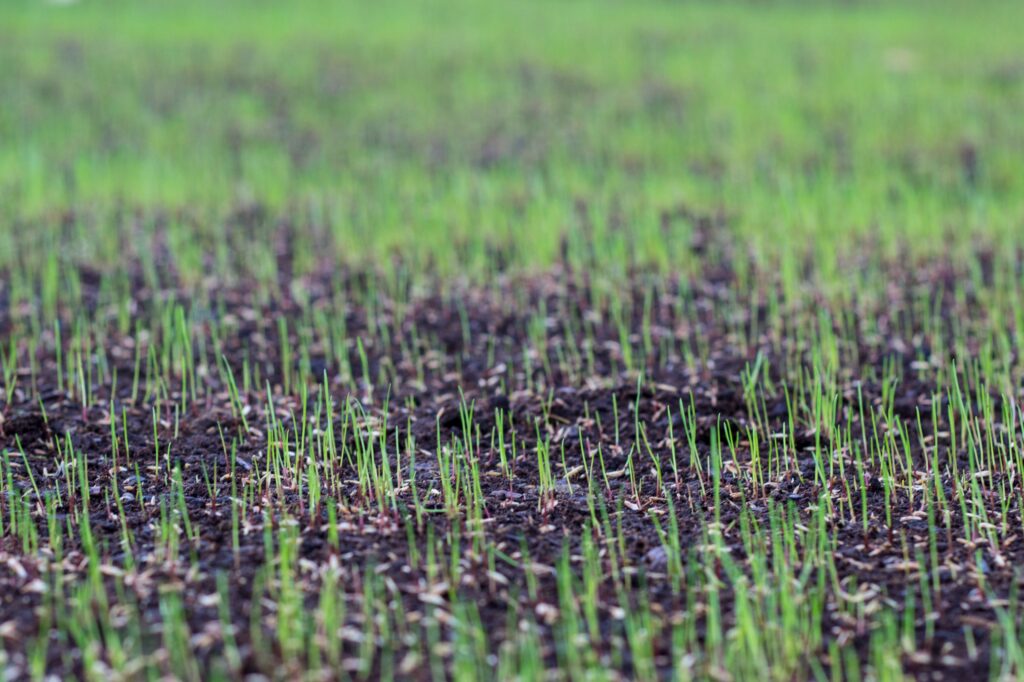
Yes. Kentucky bluegrass is usually the slowest of these common cool-season lawn grasses, not tall fescue. Under favorable moisture and temperature conditions, perennial ryegrass may appear in about 5–7 days, tall fescue can germinate in about 5–10 days, and Kentucky bluegrass may need 2–4 weeks. These are approximate ranges, and temperature, moisture, and seed varieties can affect the timing.
The first green haze does not mean every species has germinated. Continue caring for the seedbed based on the full mix, not just the fastest grass. Our guide to grass seed types for South Jersey explains why quality overseeding blends often use more than one species.
Common Watering Mistakes After Overseeding
- One heavy soaking: Mature lawns can benefit from deeper watering, but a single heavy cycle may not keep surface seed moist through the day.
- Letting rain make the decision: Check the soil. A passing shower may wet one section and miss another.
- Creating runoff: Water that carries seed into low spots produces uneven growth and wastes the application.
- Stopping after the first germination: Slower parts of the seed mix may still be developing.
- Ignoring traffic: Keep people, pets, and equipment off soft, newly seeded areas as much as practical.
Can You Keep Mowing After Aeration and Overseeding?
Overseeding an existing lawn is different from starting a new lawn on bare soil. The existing grass will continue growing, and allowing it to become excessively tall can shade the new seedlings and make the next mowing more difficult.
For Morgan Landscape mowing customers, we generally resume mowing about one week after routine aeration and overseeding. We mow at approximately four inches, avoid bagging the clippings, and adjust when unusually wet conditions make the ground too soft.
Careful mowing at the proper height should not undo an overseeding service. A sharp mower blade, gentle turns, and firm ground help protect the lawn while keeping the existing grass under control. Larger bare-soil seedings may need a different first-mowing schedule than a routinely overseeded lawn.
A Strong Lawn Starts With Good Follow-Through
Fall aeration and overseeding can help improve a thin lawn. Good seed-to-soil contact and follow-up care help protect that investment, whether you use an irrigation system, a portable sprinkler, or rely on suitable rainfall.
Morgan Landscape provides lawn care, aeration, and overseeding services in Lumberton and nearby Burlington County communities. Contact Morgan Landscape to discuss fall aeration and seeding, including a practical care plan if you do not have a sprinkler system.
Helpful references: Rutgers NJAES: Seeding Your Lawn; NC State Extension: Lawns; Iowa State Extension: Turf-type Tall Fescue; University of Maine Extension: Establishing a Home Lawn; Purdue Extension: Lawn Overseeding.