

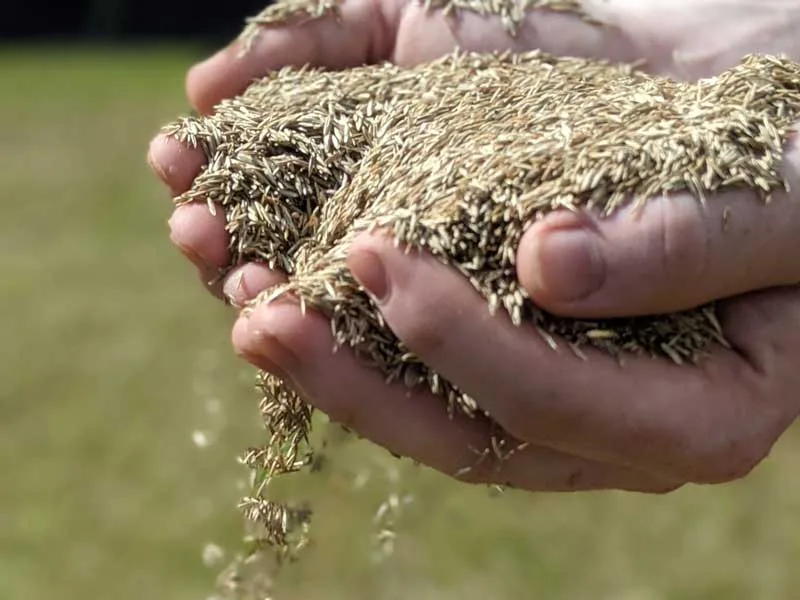
Not all grass seed is the same.
If you have ever walked through the lawn and garden section at a big box store, you have probably seen dozens of different seed bags that all promise a thicker, greener lawn. Some are labeled for sun. Some are labeled for shade. Some advertise fast growth. Some advertise patch repair.
But when it comes to building a stronger lawn in South Jersey, the seed mix matters.
The goal is not just to get grass to grow for a few weeks. The goal is to grow grass that can actually last.
South Jersey Lawns Need Cool-Season Grass
In New Jersey, most lawns are made up of cool-season grasses. These grasses do most of their growing in spring and fall, when temperatures are cooler.
That is different from warm-season grasses like Bermuda grass or zoysia grass, which are more common in hotter climates or certain specialty situations. You may see Bermuda grass in the South, where it thrives in heat, but it is not the standard choice for most residential lawns in Burlington County.
For our area, the most common lawn seed mixes usually include some combination of:
- Turf-type tall fescue
- Perennial ryegrass
- Kentucky bluegrass
Each one plays a different role.
Tall Fescue: The Workhorse of the Lawn
Tall fescue is one of the most important grasses for South Jersey lawns.
It is durable, handles heat better than many other cool-season grasses, and can develop a deeper root system when soil conditions are good. That deeper rooting ability is one of the reasons tall fescue is often used in lawns that need to handle summer stress.
Tall fescue is also known for its darker green color and strong overall performance.
One important thing to understand is that tall fescue is generally a bunch-type grass. That means it does not spread aggressively across the lawn the way some other grasses do. Each seed grows into a grass plant, and over time that plant can thicken through tillering, but bare areas still usually need new seed.
That is one reason overseeding is so important. If a tall fescue lawn gets thin, it often needs more seed added to bring density back.
Perennial Ryegrass: Fast Germination and Early Cover
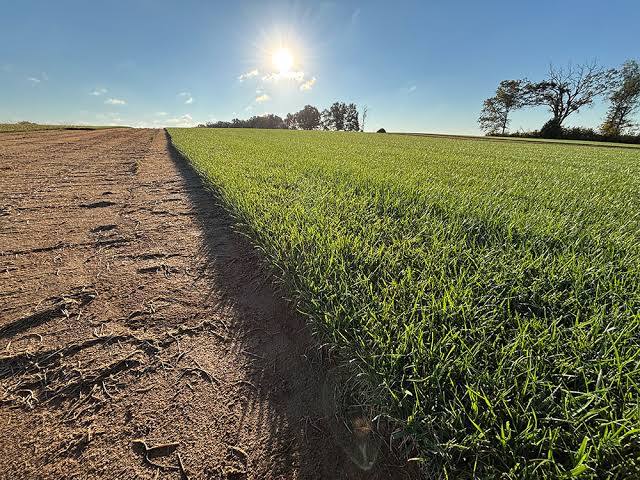
Perennial ryegrass is commonly included in seed mixes because it germinates quickly.
This can be helpful after overseeding because homeowners like to see new grass starting to come in. Perennial ryegrass can provide faster early cover while the rest of the seed mix continues establishing.
However, perennial ryegrass is not usually the main long-term grass we want to rely on by itself for a South Jersey lawn. It has strengths, but it is not the same as building a lawn mostly around high-quality turf-type tall fescue.
A seed bag that is heavy on ryegrass may look impressive early because it germinates fast. But fast germination does not always mean long-term quality.
That is one of the reasons we care so much about the full seed mix.
Kentucky Bluegrass: Density, Recovery, and Spreading Ability
Kentucky bluegrass is often included in smaller percentages in quality seed mixes.
Its biggest strength is that it can spread through underground stems called rhizomes. This helps the lawn knit together, improve density, and recover from some types of stress or damage.
Kentucky bluegrass is slower to establish than perennial ryegrass, but it can add value to a mix when used correctly.
In many professional seed blends, you may see Kentucky bluegrass included at a lower percentage because the seed is smaller and because its role is different. It is not always the largest percentage in the bag, but it can still be important.
Why Seed Mixes Are Usually Better Than One Grass Type
No single grass type is perfect for every lawn.
Some lawns get full sun. Some have shade. Some have heavy foot traffic. Some dry out quickly. Some have better soil than others. South Jersey also has hot summers, humid conditions, and periods of drought stress.
A good seed mix uses different grasses for different strengths.
Tall fescue brings durability and heat tolerance. Perennial ryegrass brings quick establishment. Kentucky bluegrass helps with density and recovery.
That is why many professional overseeding blends use a mix, such as 80% tall fescue with smaller percentages of perennial ryegrass and Kentucky bluegrass, or similar combinations depending on the lawn and the seed supplier.
The exact mix can vary, but the idea is the same: use a balanced blend that gives the lawn a better chance long term.
What Is Blue Tag Certified Seed?
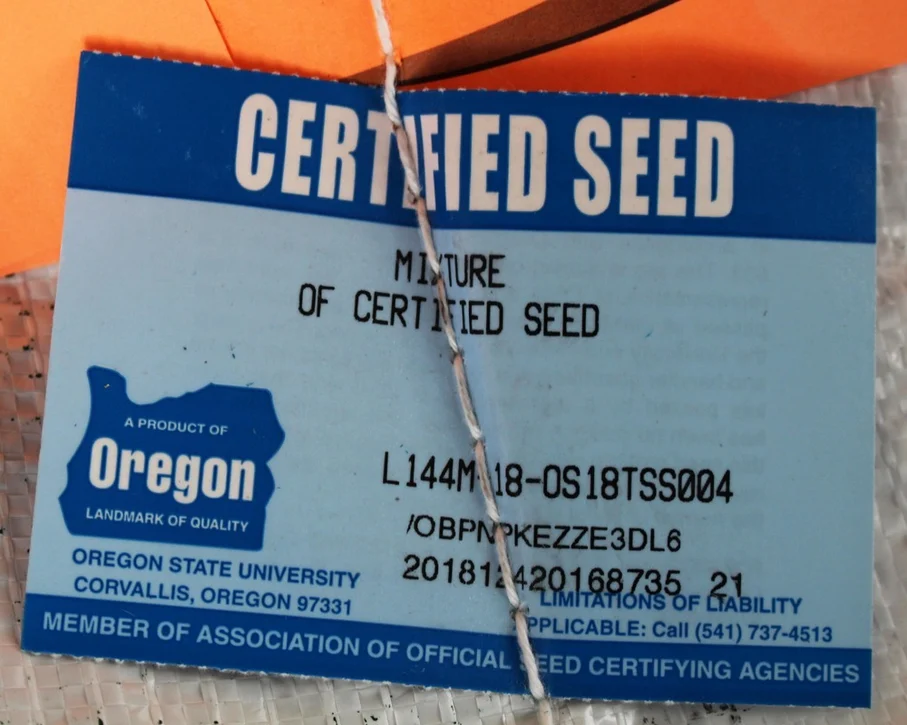
Blue Tag certified seed refers to seed that has gone through a certification process for quality and identity.
In simple terms, certified seed gives more confidence that the seed is what it says it is. The certification process helps verify things like variety, purity, germination, and weed seed content.
That matters because with lawn seed, quality is not just about whether it grows.
Most grass seed will grow if conditions are right. We have seen seed germinate in the cracks of a trailer after spilling. That does not mean it is going to build a healthy, long-lasting lawn.
The goal is not just germination. The goal is long-term turf quality.
Big Box Store Seed vs. Professional Seed
There is nothing wrong with homeowners buying seed and doing their own lawn work. Seed from a retail store can grow, especially if it is watered properly.
The issue is that many homeowners compare only the price of the bag without looking closely at what is inside.
Some retail seed products include coatings, fillers, or other material that increases the bag weight but is not actual seed. That does not automatically make the product bad, but it does mean you may not be getting as much pure seed as you think.
Some mixes are also designed to show fast results, which often means a higher percentage of fast-germinating grass types.
That quick green-up can feel good at first, but it is not always the same as building a thicker, stronger lawn that can handle South Jersey summers.
With professional overseeding, the value is not only the labor. It is also the seed quality, the equipment, the timing, and the application rate.
Quality Seed Still Needs Good Conditions
Even the best seed will not succeed without the right conditions.
Grass seed needs:
- Good seed-to-soil contact
- Consistent watering
- Proper timing
- Reasonable temperatures
- Enough sunlight
- Soil that is not severely compacted
That is why aeration and overseeding work so well together. Aeration opens the soil and improves conditions. Overseeding brings in new grass. Watering after the service helps the seed germinate and establish.
Choosing the Right Seed for a South Jersey Lawn
For most lawns in Burlington County and surrounding South Jersey towns, a quality cool-season seed mix is the right choice.
At Morgan Landscape, we typically use professional seed blends designed for our region, often built around turf-type tall fescue with smaller percentages of perennial ryegrass and Kentucky bluegrass.
The goal is not just to make grass appear quickly.
The goal is to help build a thicker, healthier lawn that has a better chance of lasting through the next summer and continuing to improve over time.
If your lawn is thin, patchy, or struggled during the summer, fall overseeding with a high-quality seed mix can make a major difference.
Contact Morgan Landscape to schedule aeration and overseeding for your South Jersey lawn.