

Spring flowering trees get all the attention. For about three weeks every April, everyone’s talking about the cherry blossoms and the dogwoods. Then May hits, the flowers drop, and most of those trees spend the next five months looking like every other green tree in the neighborhood.
That’s where summer flowering trees come in. The right trees will carry your landscape in color from June through September — the exact months you’re actually spending time outside. Here’s what’s blooming in South Jersey during the summer months and what you should know before you plant.
Crape Myrtle — The Most Planted Summer Flowering Tree in the Area
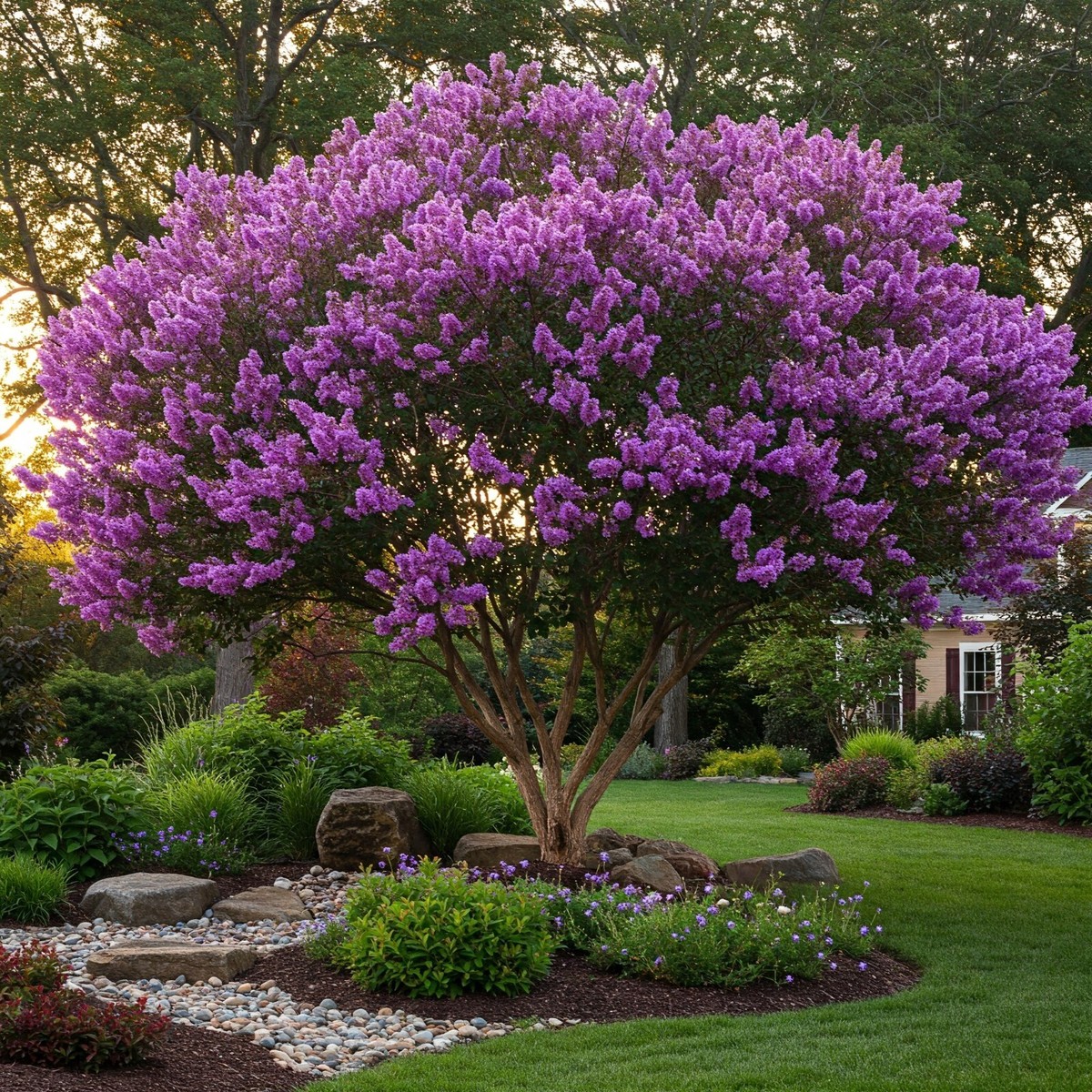
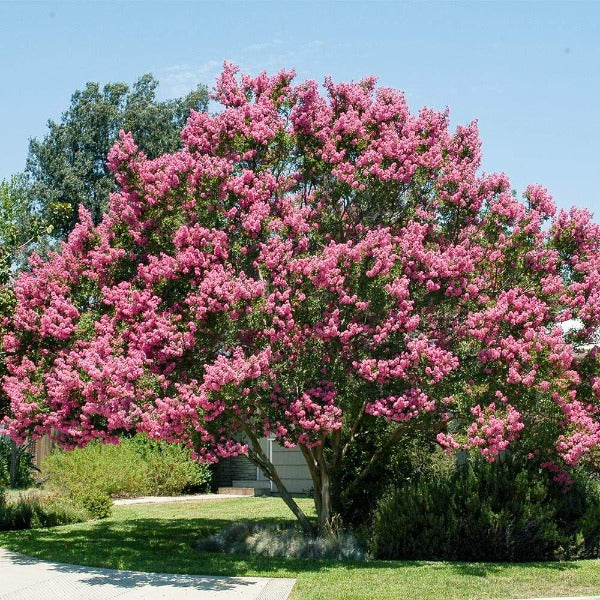
If you drive through Burlington County neighborhoods in July and August, the tree you’re going to see most is crape myrtle. There’s a good reason for that. Crape myrtles bloom heavily through mid-summer into early fall — right when almost nothing else is putting on a show — and they do it in a range of colors that few other trees can match. Red, deep pink, soft pink, white, purple, lavender. They’re also fast growers, heat tolerant, and once established, very drought resistant. For South Jersey summers, that combination is hard to beat.
They also give you something most flowering trees don’t: year-round interest. The summer flowers are the main event, but in fall the foliage turns orange and red. In winter, the bark exfoliates into a smooth, two-toned surface that looks good against bare sky. You’re not just paying for two weeks of bloom — you’re getting a four-season tree.
We plant more crape myrtles than any other flowering tree. A well-chosen crape myrtle in the right spot is one of the highest-value plants you can put in a residential landscape in this area.
One thing to know about South Jersey specifically: Burlington County sits in USDA hardiness zones 6b to 7a. Crape myrtles are rated for zones 7–9 as a general rule, which means variety selection matters here more than it does further south. Stick with cold-hardy named varieties — Natchez, Muskogee, Tuscarora, Dynamite — and they perform reliably. Lesser-known or bargain-bin varieties can struggle in hard winters. This is one of those cases where buying the right plant from the start saves you money in the long run.
Kousa Dogwood — The Summer Alternative to Flowering Dogwood
Most people know the flowering dogwood, which blooms in spring. The Kousa dogwood is its summer counterpart, and it’s arguably the better tree for a lot of South Jersey properties.
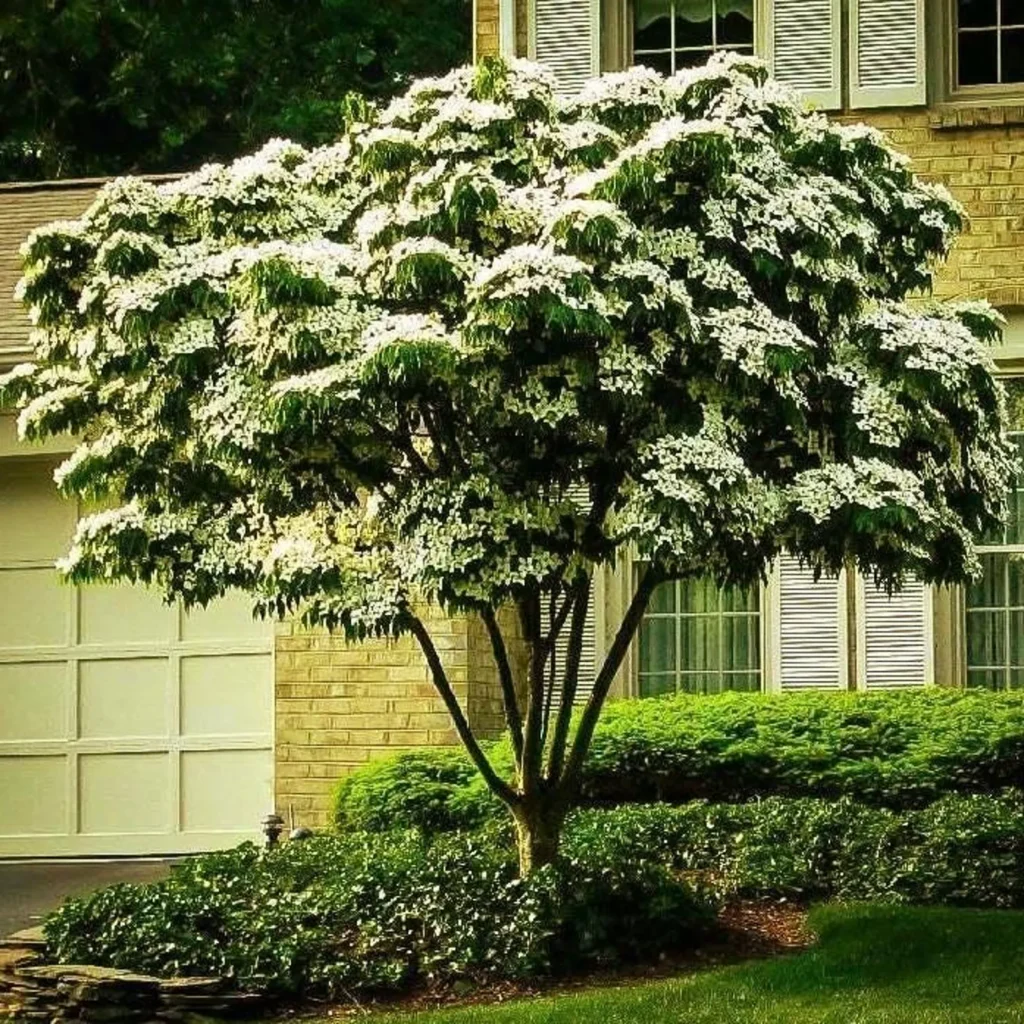
Kousa dogwood blooms in late May into June, about a month after flowering dogwood. The flowers — technically bracts, same as the spring dogwood — are white and star-shaped, but they appear after the leaves come out rather than before, which gives the tree a different look. Where the spring dogwood has that clean, bare-branch-with-flowers silhouette, Kousa has a lush, full canopy with flowers emerging through the foliage.
Beyond the bloom, Kousa has significant advantages over its spring-blooming cousin. It’s more disease resistant — flowering dogwood is susceptible to anthracnose, a fungal disease that has been devastating dogwood populations in the northeast. Kousa handles it much better. The bark also exfoliates with age, revealing patches of tan, gray, and orange that make it an interesting tree even in winter. It produces raspberry-like reddish fruit in late summer that birds eat. For a residential property, this is close to an ideal four-season ornamental tree.
Mature size is 15–20 feet with a rounded, layered canopy. It does best in partial to full sun with well-drained, slightly acidic soil — similar conditions to flowering dogwood.
Japanese Tree Lilac — Late Spring into Summer
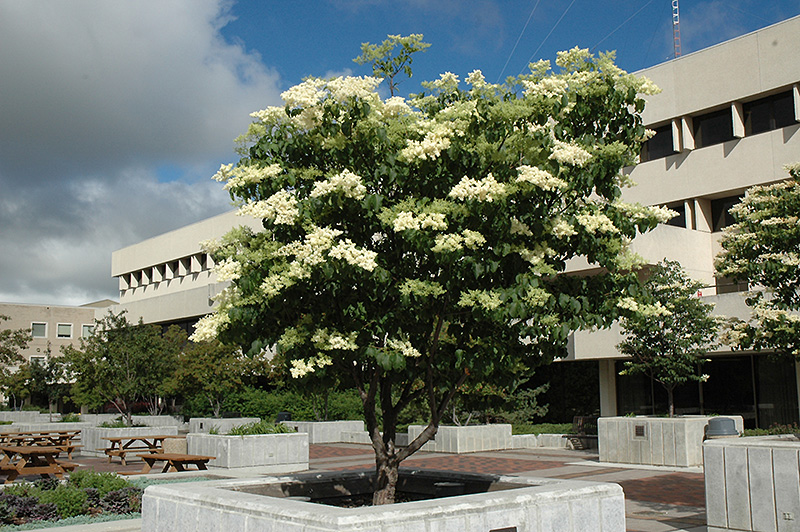
Japanese Tree Lilac splits the difference between spring and summer. It blooms in late May to early June with large clusters of creamy white flowers that are fragrant — think lilac scent on a tree-sized plant. The bloom comes after most spring-flowering trees have already finished, which gives it a useful place in the sequence.
It’s a tough, adaptable tree. Compatible with all New Jersey hardiness zones, tolerant of a range of soil types, and grows to 20–30 feet with an upright oval shape. It’s a solid choice for a yard that needs a white-flowering focal point but already has spring trees covered.
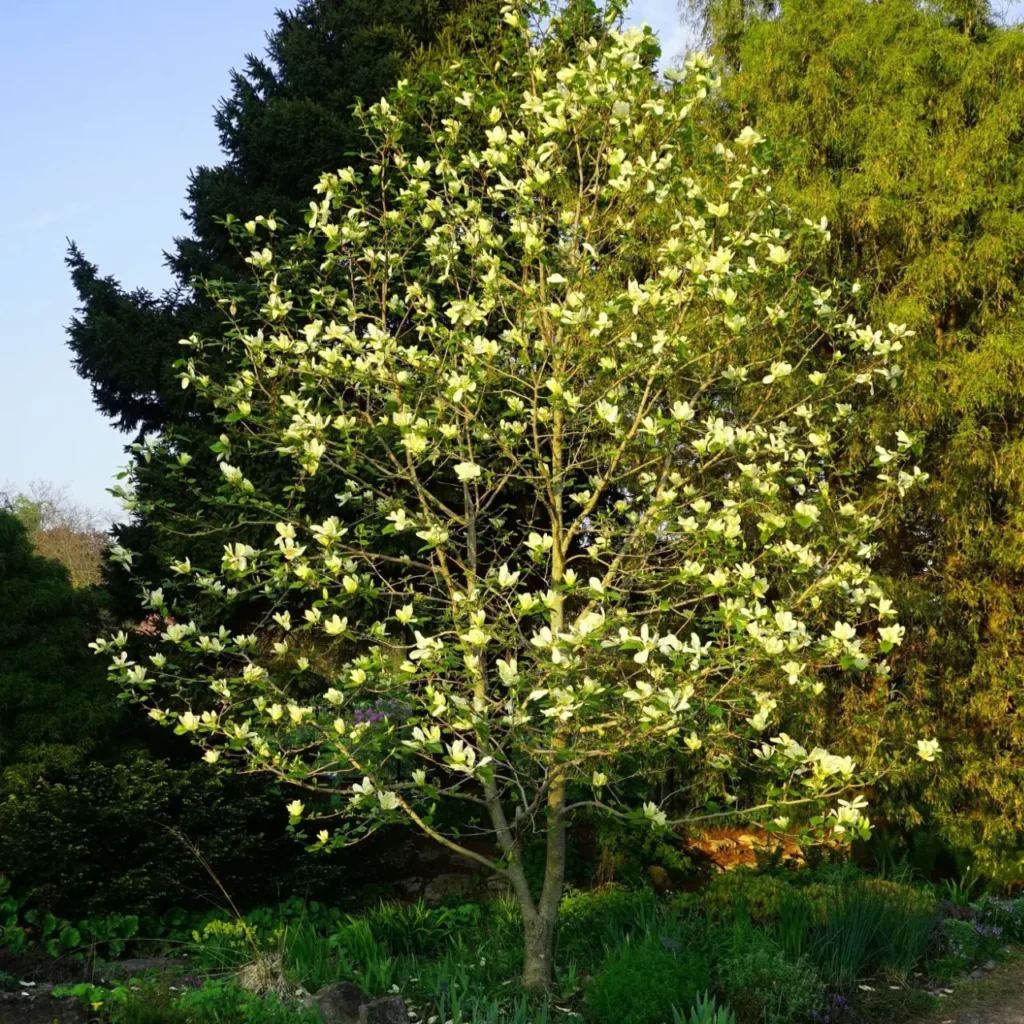
Sweetbay Magnolia — Summer Fragrance
Sweetbay Magnolia is the summer version of the more well-known saucer magnolia that blooms in spring. It flowers from late May through July with smaller, creamy white blossoms that are powerfully fragrant — particularly in the evening. This is a tree you notice when you walk past it.
It’s a New Jersey native, which means it’s adapted to local soils and doesn’t need a lot of coddling. It handles partial shade and tolerates wetter soils better than most ornamental trees — if you have a low spot in your yard that drains slowly, this is one of the few flowering trees that will actually work there. Mature size is typically 10–20 feet, often with a multi-stemmed form.
Goldenrain Tree — Something Different
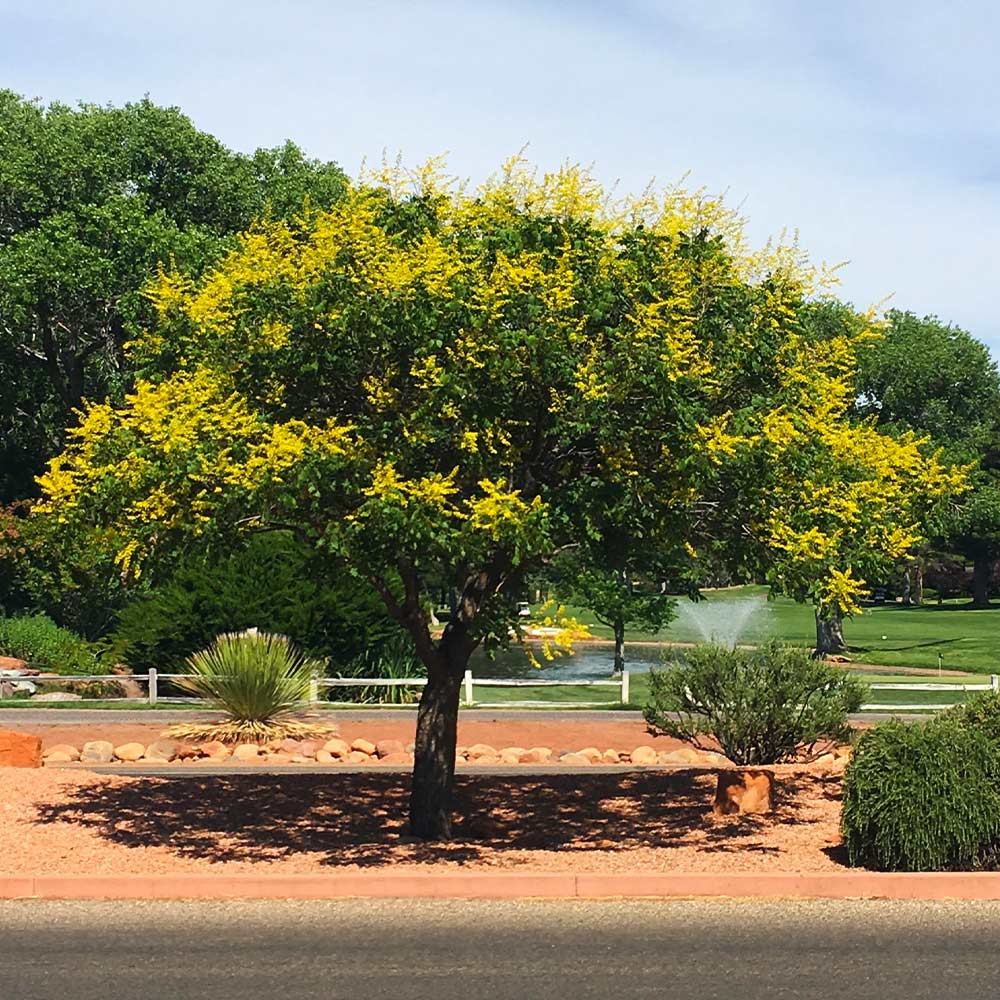
Goldenrain Tree is less common than the others on this list but worth knowing about. It blooms in midsummer — late June into July — with clusters of small yellow flowers, which is unusual because very few trees bloom yellow at that time of year. After the flowers drop, papery tan seed pods hang on the tree through fall and give it a distinctive look that some people love.
It’s a tough, adaptable tree that handles heat, drought, and poor soil well. It grows 25–35 feet with a broad, rounded crown. It’s not going to be the showiest tree on the block, but if you want something that blooms yellow in July and isn’t planted in every other yard, it’s worth considering.
Vitex — Not Technically a Tree, But Worth Mentioning
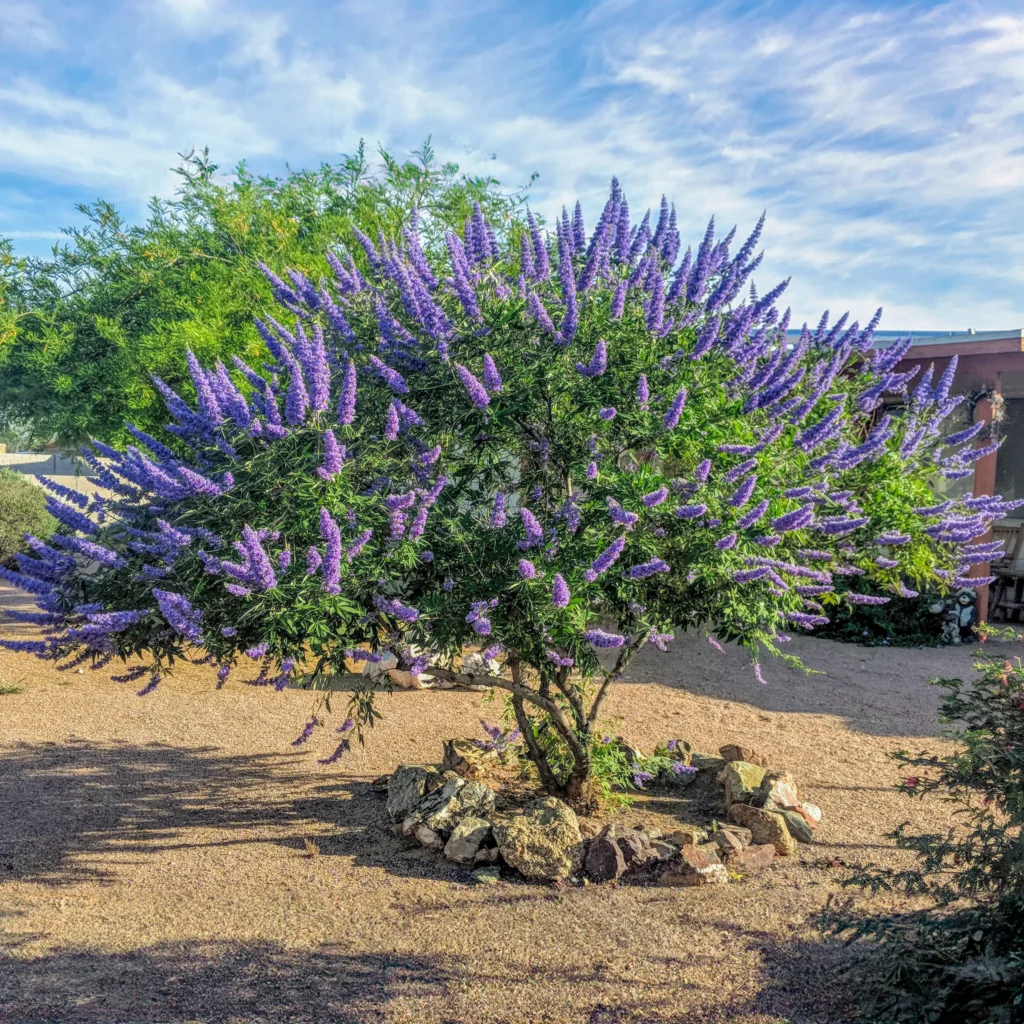
Vitex, also called chaste tree, gets large enough to function as a small tree in South Jersey landscapes — typically 10–15 feet. It blooms in July and August with spikes of blue-purple or lilac flowers that resemble butterfly bush in both color and the insects it attracts. It’s one of the few plants in that size range that blooms reliably in the middle of summer in purple tones.
It dies back to the ground in hard winters in zone 6, but comes back strong from the roots every spring and still flowers on new wood. Think of it as a large, woody perennial that acts like a tree. For a mixed planting where you want continuous color from a taller plant without committing to a full tree, vitex is a good tool.
Making the Most of Summer Color
The best residential landscapes don’t just think about one season at a time. A property that has spring flowering trees, a crape myrtle or two for midsummer, and some fall color trees is going to look good from March through November. That’s what we think about when we’re doing landscape design — not just what looks good the day we plant it, but what the yard is doing twelve months a year.
If your yard goes quiet after the dogwoods drop in May, summer flowering trees are the fix. A well-placed crape myrtle in a front bed can change the entire feel of a property during the exact months people are outside the most.
Morgan Landscape handles landscape design and planting throughout Burlington County — Lumberton, Eastampton, Mount Laurel, Marlton, and the surrounding towns. If you want to talk through what summer color could look like in your yard, we’re happy to take a look.