

Dethatching is one of the most common lawn services homeowners ask about.
It is also one of the most misunderstood.
Many homeowners hear the word “thatch” and assume it is automatically bad. They think if their lawn is struggling, they must need dethatching.
In reality, most lawns do not need mechanical dethatching every year. Some lawns may never need it. In many cases, core aeration is the better first step.
What Is Thatch?
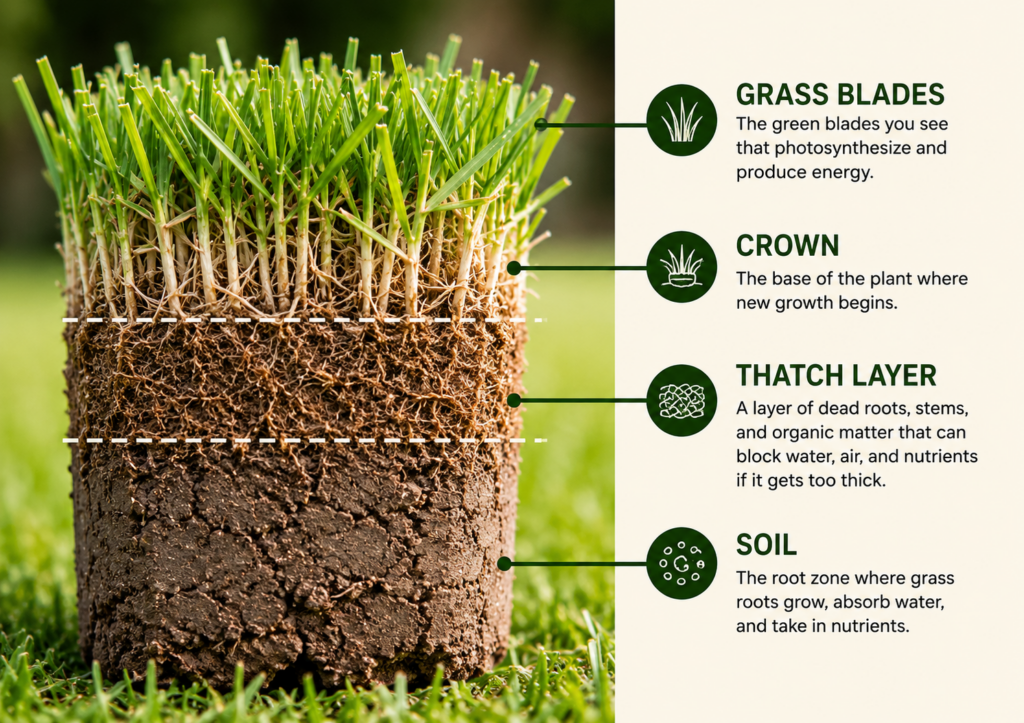
Thatch is the layer of organic material that sits between the green grass blades and the soil surface.
It is made up of things like stems, crowns, roots, and other plant material that break down slowly over time.
A small amount of thatch is normal. It can even be beneficial because it helps cushion the lawn and protect the soil surface.
The problem is excessive thatch.
When the thatch layer gets too thick, it can prevent water, air, and nutrients from moving properly into the soil. It can also cause the lawn to root into the thatch layer instead of the actual soil. That makes the lawn more vulnerable to heat, drought, disease, and stress.
So yes, thatch can become a problem.
But that does not mean every lawn needs to be dethatched.
What Is Dethatching?
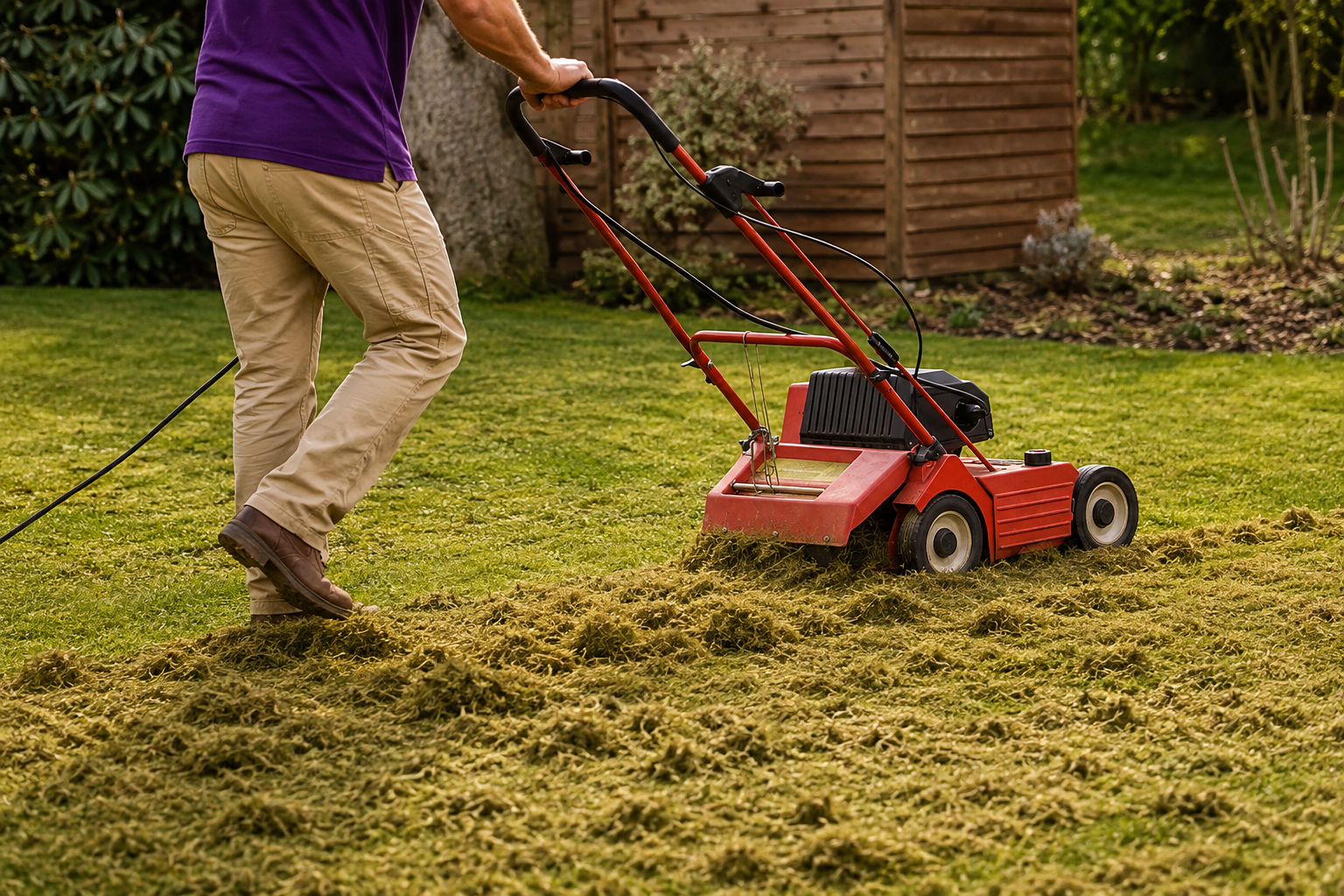
Dethatching is the process of mechanically removing thatch from the lawn. A dethatching machine uses blades or tines to pull material up from the lawn surface.
When a lawn truly has excessive thatch, dethatching can be useful.
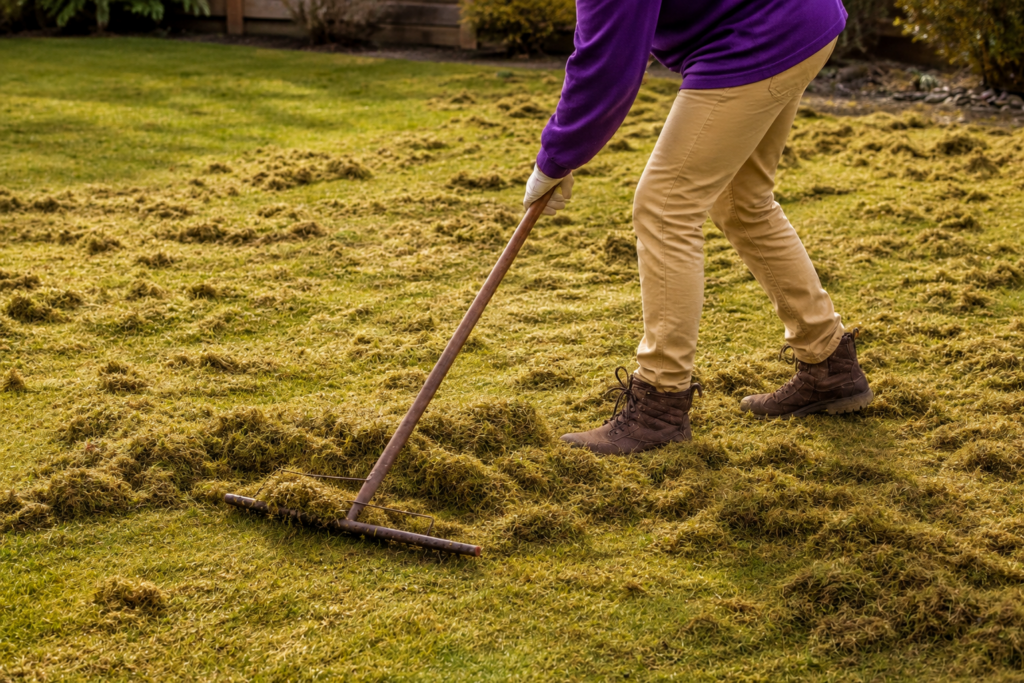
But it is also disruptive. It can tear up the lawn, create a large amount of debris, and leave the yard looking rough for a period of time afterward. It is also labor-intensive, which makes it more expensive.
That is why we do not recommend dethatching as a routine service for every lawn.
It has a place, but it should be used when the lawn actually needs it.
Why Homeowners Think They Need Dethatching
A lot of lawn problems get blamed on thatch.
Thin lawn? Must be thatch.
Brown spots? Must be thatch.
Water running off? Must be thatch.
Grass struggling in summer? Must be thatch.
Sometimes thatch is part of the problem. But many times, the bigger issue is compacted soil, poor watering, heat stress, shallow roots, lack of seed, or weak turf density.
That is why we usually look at aeration first.
Why Aeration Is Usually the Better First Step
Core aeration solves a problem that many South Jersey lawns actually have: compacted soil.
Our area has plenty of lawns with heavier soil, high foot traffic, mower traffic, and summer stress. Over time, the soil gets tight. When that happens, water and nutrients stay closer to the surface instead of moving deeper into the root zone.
The grass responds by keeping shallower roots.
Shallow roots make the lawn weaker in summer. When hot weather arrives, the top layer of soil dries out quickly, and the lawn struggles.
Core aeration helps loosen the soil by pulling plugs from the lawn. These plugs pass through the thatch layer and into the soil. That creates thousands of openings across the yard.
Those openings help:
- Reduce compaction
- Improve air movement
- Improve water penetration
- Improve nutrient movement
- Encourage deeper rooting
- Improve seed-to-soil contact
- Help the lawn naturally break down thatch over time
That is why aeration usually provides more overall benefit than dethatching for the average lawn.
Is Aeration the Same as Dethatching?
Not exactly.
Aeration is not the same as running a dethatching machine over the lawn. It does not remove the thatch layer in the same aggressive way.
But core aeration does pull plugs through the thatch layer. When you look at the plugs after aeration, you can often see the thatch, soil, and root zone together.
So while aeration is not technically the same thing as dethatching, it does help manage thatch in a healthier, less disruptive way for most lawns.
That is the distinction we think homeowners should understand.
Dethatching removes thatch aggressively.
Aeration improves the soil environment so the lawn can grow stronger and naturally manage thatch better over time.
When Does a Lawn Actually Need Dethatching?
A lawn may need dethatching if the thatch layer is truly excessive.
A simple way to check is to cut out a small wedge of turf and look at the layer between the grass and soil. If the thatch layer is very thick, spongy, and preventing water from reaching the soil, dethatching may be worth considering.
But if the lawn has only a normal thatch layer, dethatching may not be necessary.
In many cases, aeration and overseeding will produce a better result with less disruption.
Why We Usually Recommend Aeration Over Dethatching
At Morgan Landscape, we are not against dethatching. If a lawn truly needs it, it can be the right service.
But for most lawns we see in Lumberton, Eastampton, Mount Laurel, Mount Holly, Westampton, Medford, Marlton, and surrounding areas, aeration is usually the better starting point.
It addresses the soil. It helps roots. It improves water movement. It makes overseeding more effective. And it helps strengthen the lawn for the following year.
Dethatching is more aggressive, more labor-intensive, and often unnecessary unless there is a confirmed thatch problem.
That is why when a homeowner asks us about dethatching, we often recommend fall aeration and overseeding instead.
The Bottom Line
Most lawns do not need to be dethatched every year.
Most lawns do benefit from aeration.
If your lawn is thin, compacted, struggling in summer, or not filling in the way you want, aeration and overseeding is usually the better place to start.
If you are not sure whether your lawn needs dethatching, aeration, or overseeding, Morgan Landscape can help you choose the right approach.
Contact Morgan Landscape to schedule fall aeration and overseeding for your South Jersey lawn.