

After a long South Jersey summer, most lawns are not at their best.
Between heat, drought stress, foot traffic, mowing, pets, weeds, and compacted soil, even a healthy lawn can start to thin out by late August or September. That is why fall is one of the most important times of year for lawn care.
For many homeowners in Burlington County and the surrounding South Jersey area, fall aeration and overseeding is one of the best ways to help the lawn recover, thicken up, and prepare for stronger growth next spring.
What Is Core Aeration?
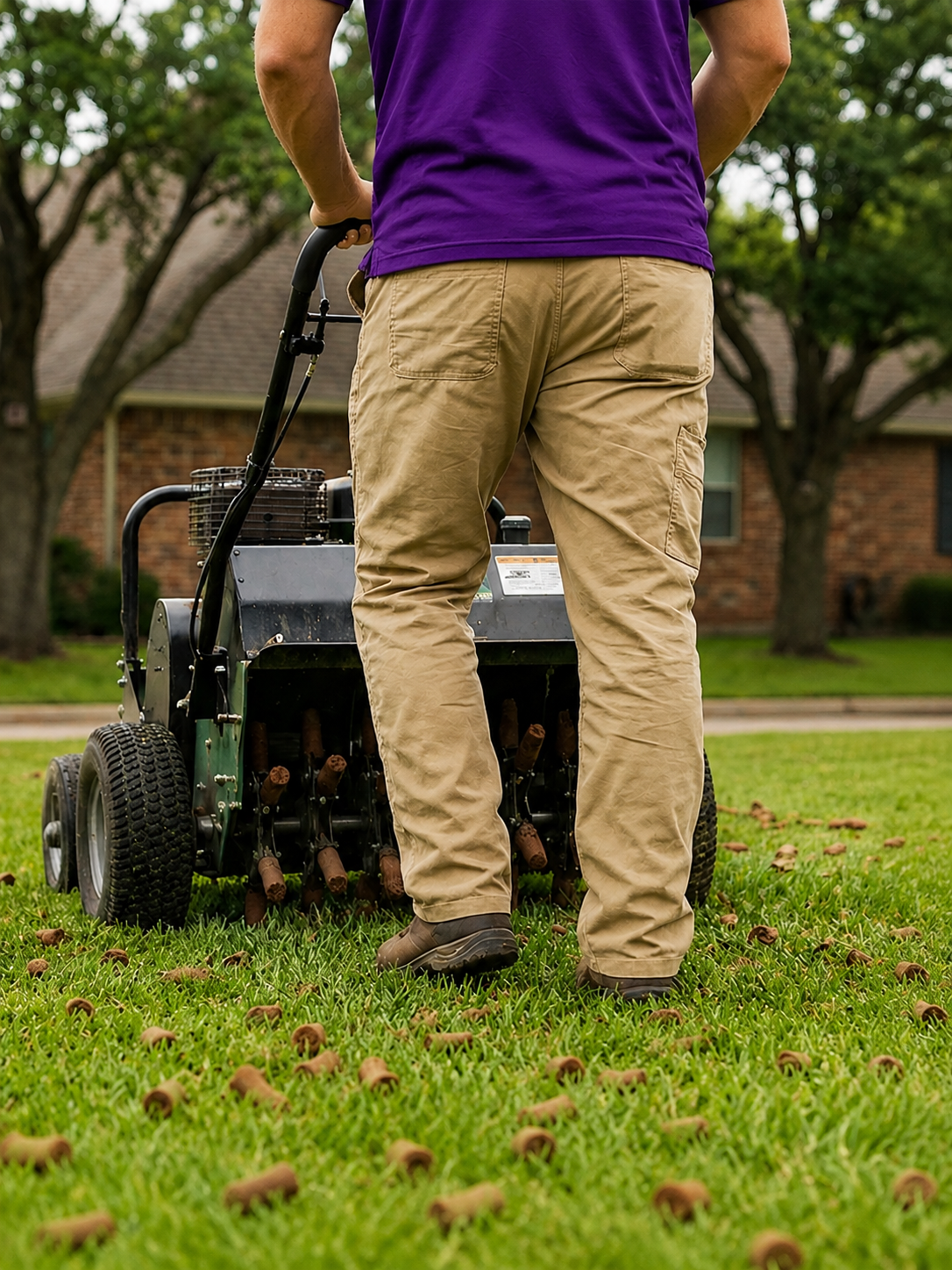
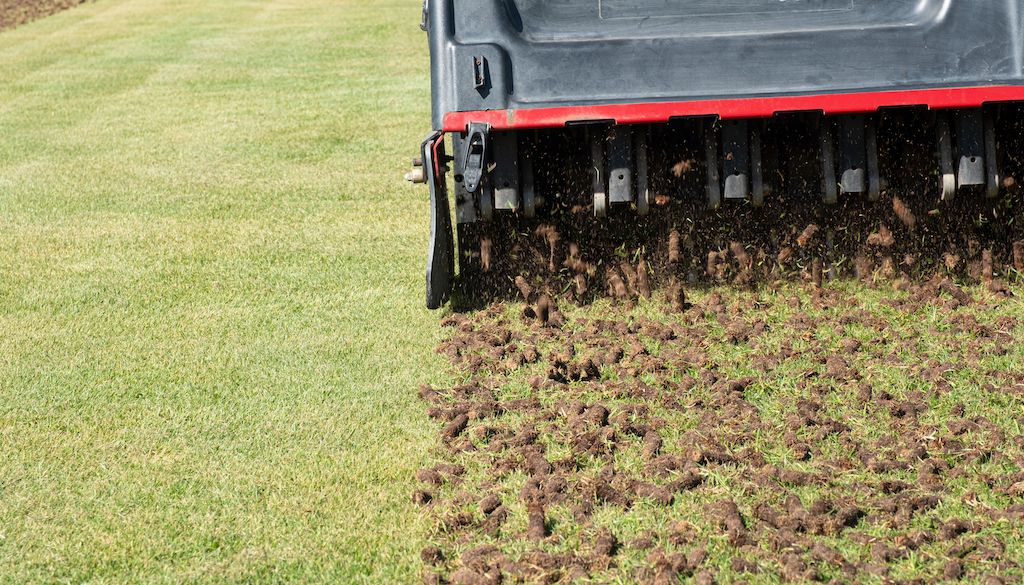
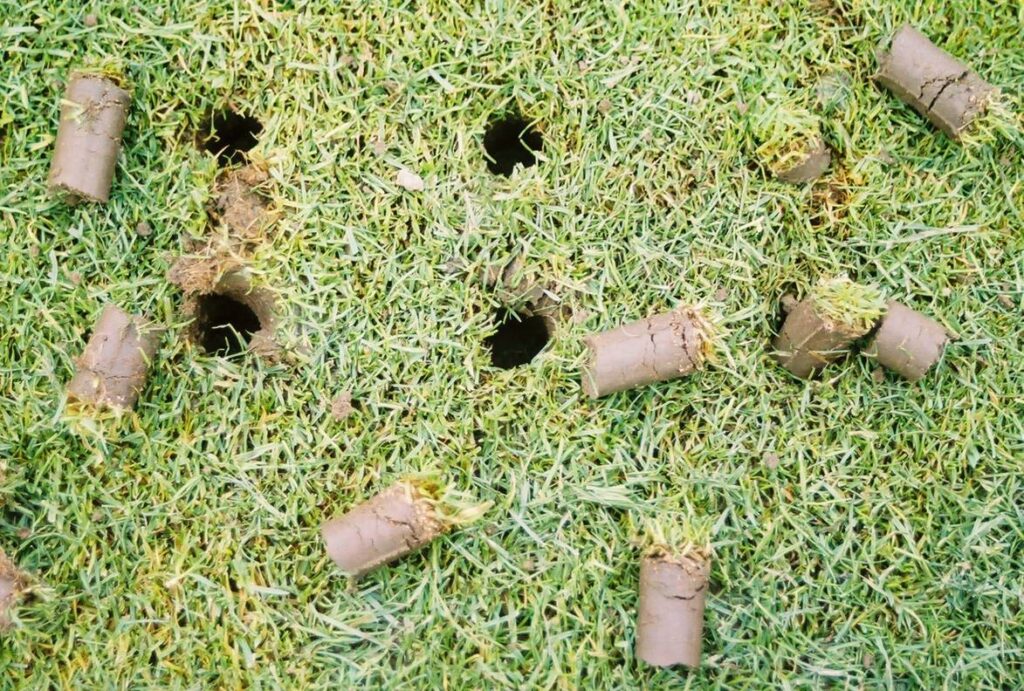
Core aeration is the process of pulling small plugs of soil from the lawn. These plugs are usually a few inches deep and are left on the surface of the lawn to naturally break down.
A common misunderstanding is that the holes are mainly there for the seed to fall into.
Some seed will make its way into the aeration holes, and that can help. But the bigger benefit of aeration is what it does for the soil.
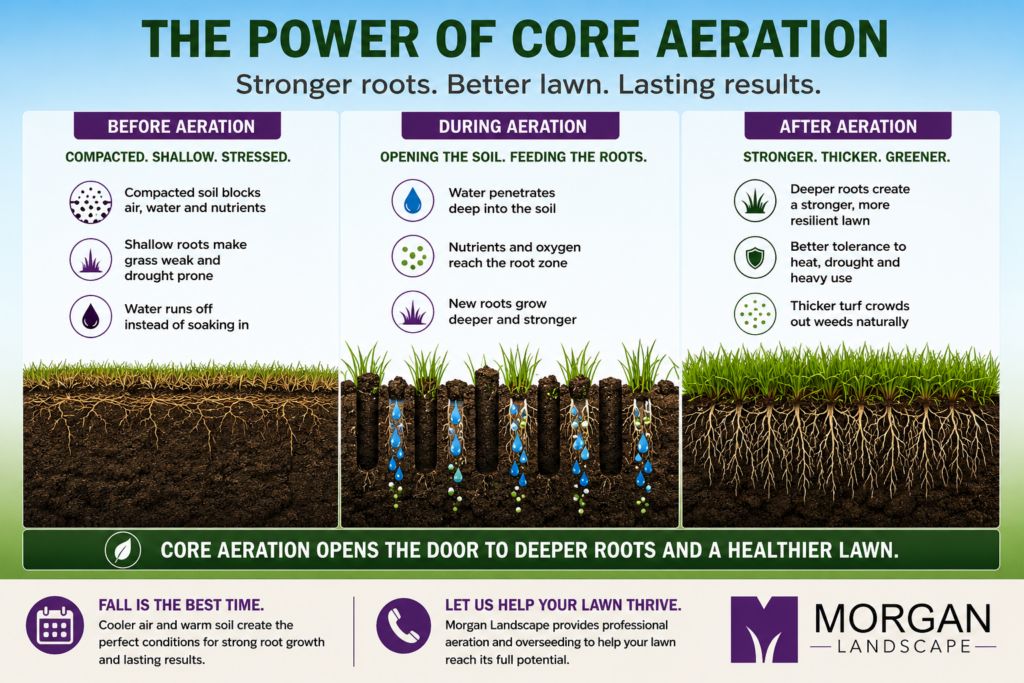
Over time, soil becomes compacted. This is especially common in lawns that get a lot of use, lawns with heavier clay soil, and lawns that have gone through a hot, dry summer. When soil is compacted, water, air, and nutrients have a harder time moving down into the root zone.
That means the lawn’s root system stays more shallow.
Shallow roots make the lawn more vulnerable during the summer. When the weather gets hot and dry, a lawn with shallow roots struggles faster because the roots are living close to the surface, where the soil dries out first.
Core aeration helps loosen that compacted soil. It opens the lawn up so water, air, and nutrients can move deeper into the ground. Over time, that helps encourage deeper roots and a stronger lawn.
Why Overseeding Matters
Fertilizer is important, but fertilizer does not create new grass.
Fertilizer helps the existing grass grow, recover, and maintain better color. But if the lawn is thin, patchy, or has bare areas, fertilizer alone cannot fill those spaces with new grass plants.
That is where overseeding comes in.
Overseeding adds new grass seed into the existing lawn. This helps thicken the lawn, fill in thin areas, and introduce fresh, healthy grass after the stress of summer.
We often explain it this way: after a long summer, the lawn needs reinforcements. The existing grass has been working hard all season. Overseeding brings in new grass plants so the lawn is not relying only on what is already there.
A thicker lawn also helps naturally crowd out weeds. When bare soil is exposed, weeds have an easier opportunity to move in. When the lawn is thick and healthy, there is less open space for weeds to take advantage of.
Why Fall Is the Best Time to Seed
Fall is usually the best time to seed cool-season lawns in South Jersey.
The reason is simple: grass seed likes the combination of warm soil and cooler air.
In early fall, the soil is still warm from summer, which helps seed germinate. At the same time, the days and nights are starting to cool down, which is much less stressful for young grass than the heat of summer.
Spring may feel similar to fall in terms of air temperature, but the soil is different. In spring, the ground is still warming up after winter. In fall, the ground is already warm.
That difference matters.
Fall also gives new grass time to establish before the following summer. A lawn seeded in fall has the rest of the fall season, then another major growth period the following spring before it has to deal with summer heat again.
That is why fall seeding is usually more reliable than waiting until spring.
When Will You See Results?
You will usually see some germination and improvement in the fall, especially if the lawn is watered properly.
But the biggest visual payoff often comes the following spring.
This surprises some homeowners. They expect the full result immediately in the fall. In reality, fall seeding is an investment into the next growing season.
The new grass starts to establish in the fall, then continues strengthening when the lawn wakes back up in spring. That late April to early May “spring pop” is often when homeowners really notice the difference.
The lawn looks thicker, greener, and more filled in because the work was done months earlier.
Aeration Helps Seed-to-Soil Contact
Another major benefit of aeration before overseeding is improved seed-to-soil contact.
Grass seed does not establish well when it is sitting on top of thatch, leaves, or compacted ground. It needs contact with soil.
Aeration creates thousands of openings across the lawn and helps loosen the surface. This gives the seed a much better chance of making contact with the soil and starting properly.
That does not mean every seed needs to fall directly into an aeration hole. The overall goal is to create better conditions across the entire lawn.
Is Aeration and Overseeding Worth It Every Year?
For most lawns, yes.
A lawn is living. It goes through stress every year. Some grass naturally dies out, some areas thin, and some areas get damaged by weather, insects, pets, or traffic.
Annual aeration and overseeding helps keep the lawn moving in the right direction instead of slowly declining year after year.
It is especially helpful for lawns that:
- Thin out every summer
- Have compacted soil
- Get a lot of foot traffic
- Have bare or weak areas
- Struggle with weeds
- Dry out quickly in hot weather
- Have not been seeded in several years
Schedule Fall Aeration and Overseeding in South Jersey
If your lawn looked tired, thin, or stressed this summer, fall is the best time to start rebuilding it.
At Morgan Landscape, we provide fall aeration and overseeding services for homeowners throughout Lumberton, Eastampton, Mount Holly, Mount Laurel, Westampton, Hainesport, Medford, Marlton, and surrounding South Jersey towns.
Aeration helps open the soil. Overseeding brings in new grass. Together, they give your lawn the best opportunity to thicken up and come back stronger next spring.
Contact Morgan Landscape to get on the schedule for fall aeration and overseeding.